

Valves are everywhere in industrial processes—controlling flow, isolating equipment, and protecting systems from overpressure. Yet for many engineers and technicians, the range of options can feel overwhelming. This guide covers the fundamentals of industrial valves, with a closer look at three widely used types: the lined valve, the pinch valve, and the stainless steel ball […]

Backflow is one of those problems that looks minor on paper but can shut down an entire process line in practice. A check valve is the simplest fix. It lets fluid move in one direction and stops it from reversing. But walk into any valve supplier’s catalog, and you’ll quickly face a choice: swing check […]

Choosing the wrong metal for a seawater pipeline is an expensive mistake. It leads to early valve failure, unplanned shutdowns, and high repair costs. Two of the most common materials used in marine and desalination systems are 316 stainless steel and Duplex 2205. Both are good metals — but they perform very differently in saltwater […]

P&ID (Piping and Instrumentation Diagram) valve symbols, also referred to as p and id valve symbols or P&ID valve symbols, are essential tools for engineers, EPC teams, and maintenance crews. They allow quick identification of valve type, actuation method, and fail-safe position directly on process diagrams. This guide serves as a quick-reference library of the […]
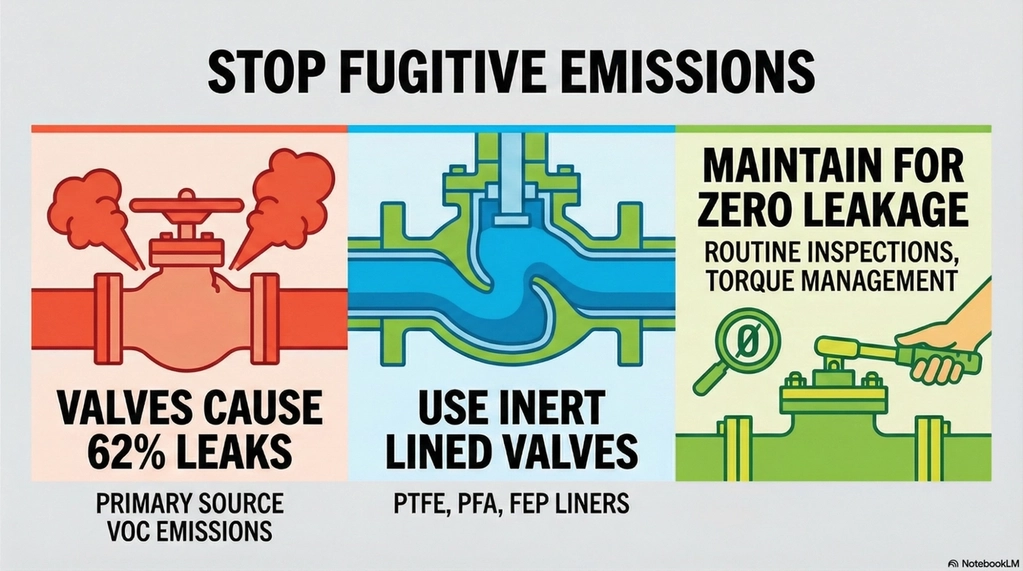
Lined valve low fugitive emission solutions help address a major challenge in modern industrial facilities. Fugitive emissions represent a major challenge for modern industrial facilities. These unintentional leaks of gases or vapors happen at process equipment connections, gaskets, and seals, negatively affecting environmental safety and operational emissions efficiency. Regulating these leaks is a primary objective […]

A fluorine lined valve acts as a primary barrier against corrosive process fluids. However, even small flaws in the lining can lead to severe system damage or leaks, often called “holidays or pinholes.” These defects, often microscopic gaps from manufacturing, mechanical stress, or thermal cycling, compromise the valve’s structural integrity. By explaining the standard methods […]
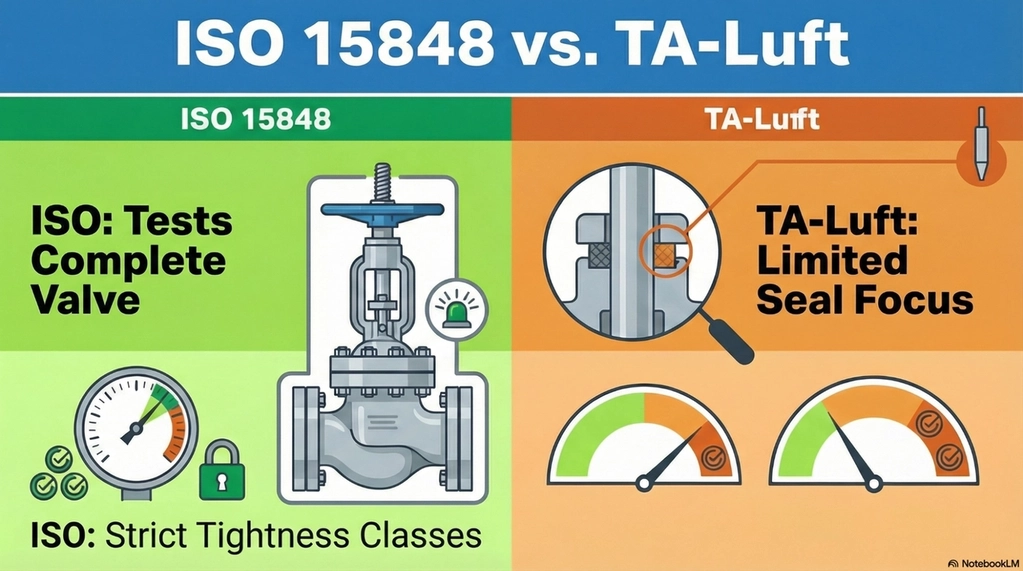
Lined valve low fugitive emission solutions help regulate unintended gas leaks from valves, pumps, and other industrial equipment. These releases can negatively impact environmental safety and regulatory compliance. Therefore, facilities must choose appropriate testing standards to ensure their valve systems remain tight. This guide compares ISO 15848 and TA-Luft to help determine which fugitive emission […]
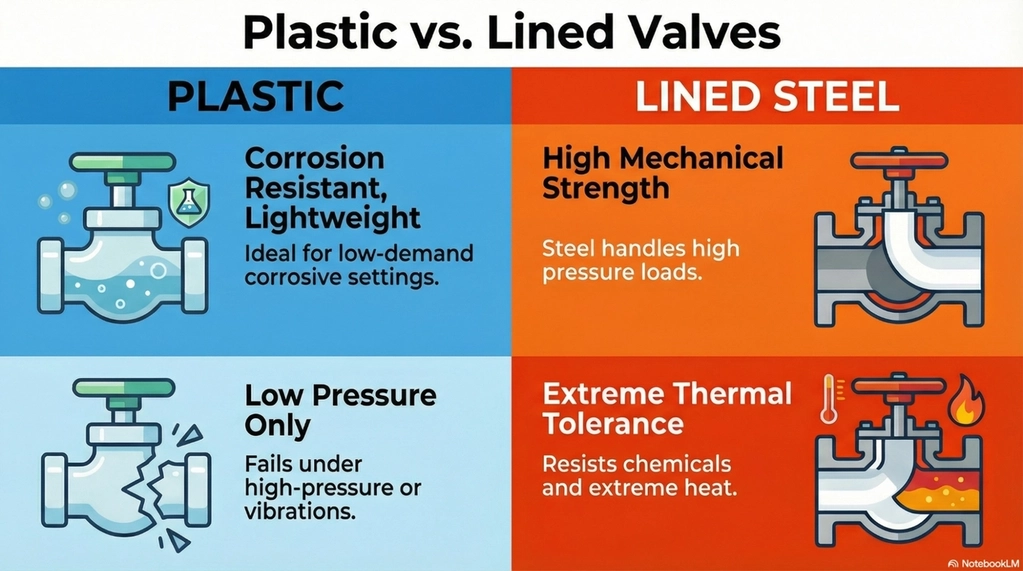
Choosing the right piping components directly affects system efficiency in flow regulation and personnel safety in the chemical processing industry. Therefore, understanding material properties helps engineers prevent leaks and premature wear in industrial lines. This guide outlines the technical distinctions between plastic vs PTFE/PFA lined ball valves to help you make informed decisions for different […]

Pinch valve solutions play a vital role in battery recycling as electric vehicle demand continues to grow. One of its main challenges is managing “black mass,” the abrasive powder generated when used batteries are mechanically processed and then converted into a highly abrasive and corrosive slurry. This guide explains how a pinch valve’s full-bore design […]

PTFE lined butterfly valve and hard seal butterfly valve differ in terms of performance characteristics in industrial flow control components. Therefore, engineers must choose an accurate design to prevent process failures and leakages. This article clarifies which valve suits particular piping requirements and operational conditions. Defining PTFE and Hard Seal Butterfly Valves PTFE (Polytetrafluoroethylene) lined […]


