
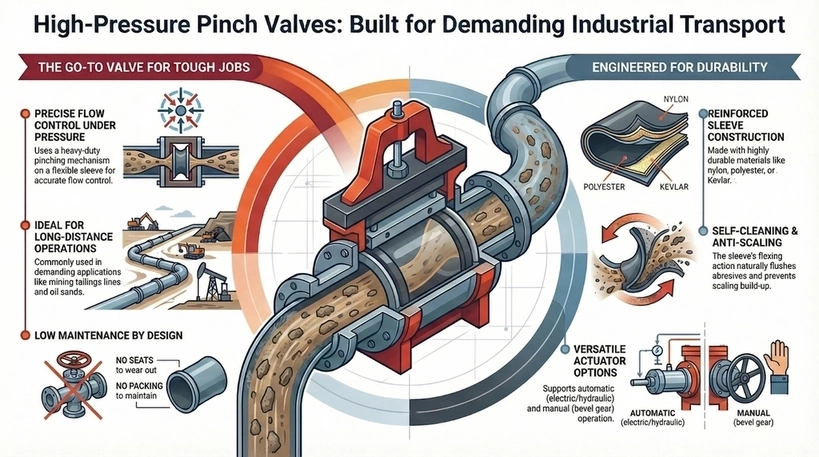
High pressure pinch valves, like PN16 pinch valve and class 150 pinch valve designs, involve a rugged and heavy-duty pinching mechanism in positioning the sleeve, resulting in an almost accurate and measurable flow of media. This kind of valve is popular and commonly used for long distance operations in mining tailings lines or oil sands, […]
High pressure pinch valves, like PN16 pinch valve and class 150 pinch valve designs, involve a rugged and heavy-duty pinching mechanism in positioning the sleeve, resulting in an almost accurate and measurable flow of media. This kind of valve is popular and commonly used for long distance operations in mining tailings lines or oil sands, […]
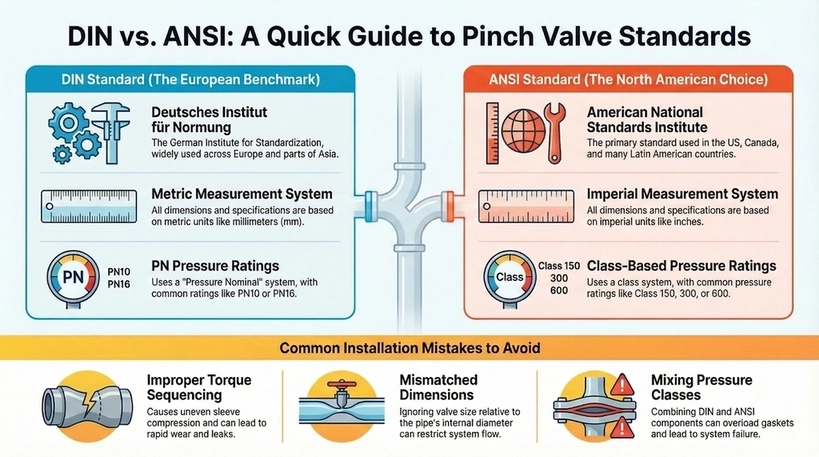
Understanding pinch valve dimensions and flanges ensures seamless integration into piping systems, particularly when choosing between DIN vs ANSI. The two are different but commonly used standards by organizations in engineering, manufacturing, and product design. DIN was developed in Germany but widely adopted across Europe and parts of Asia. Meanwhile, ANSI standards, which originate from […]
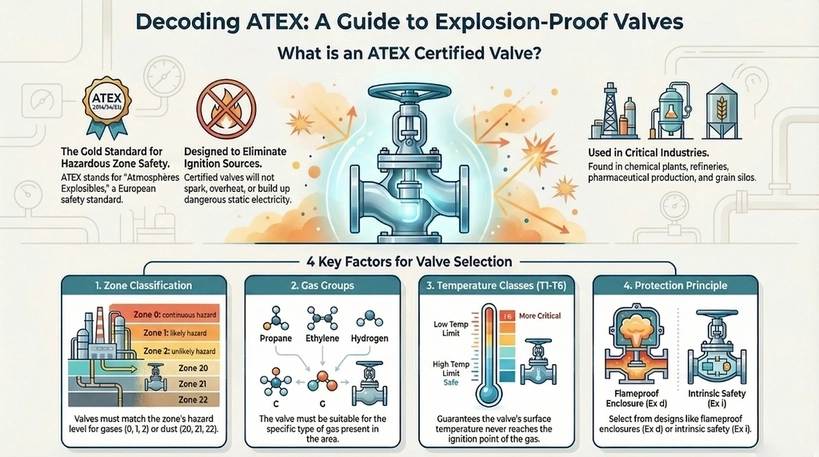
Selecting the appropriate explosion proof valve is essential for safety in industries that pose explosion risks. ATEX certified valves guarantee compliance with European standards, preventing ignition sources from heat, sparks, or static electricity. This blog explores key factors for choosing ATEX certified explosion proof valves that ensure overall operational safety, highlighting the entailed regulations and […]
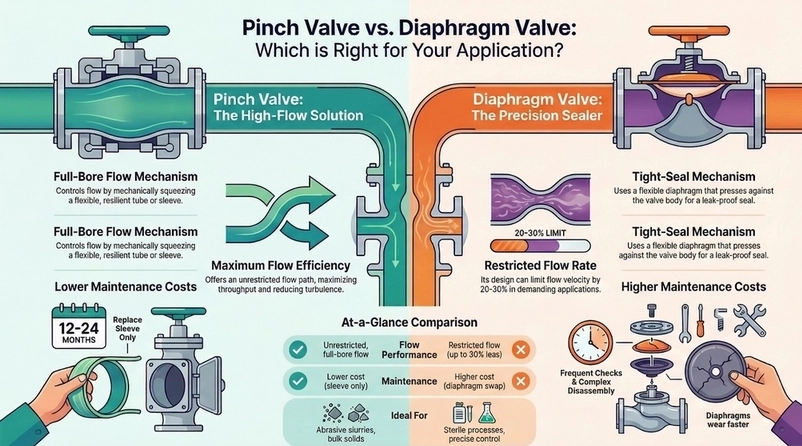
When handling abrasive or viscous media in industrial processes, the type of valve used can heavily affect the performance, efficiency, and overall user experience. In relation to this, two of the most common valve options are pinch and diaphragm valves. In this blog, we delve into the pinch valve vs diaphragm valve discussion, analyzing flow […]
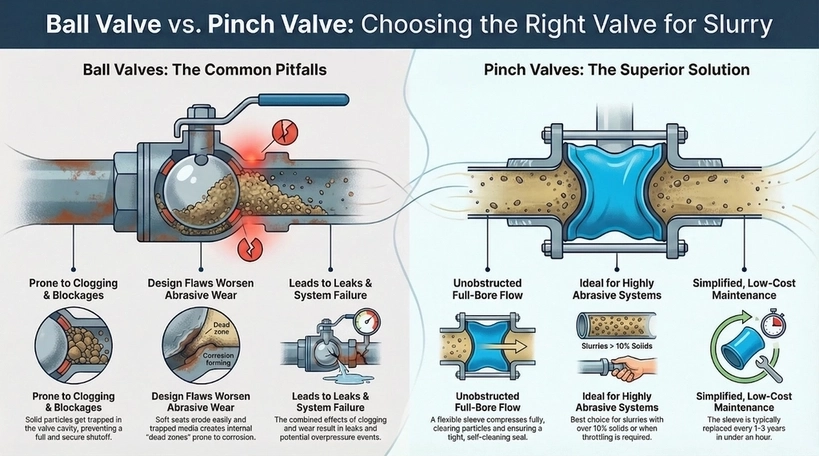
Slurries pose risks in industrial piping as they blend liquids with abrasive solids that erode components rapidly. Although ball valves for slurry applications may seem ideal thanks to their quarter-turn operation that provides quick shut-off, it often experiences rapid wear when used in systems with debris or abrasive particles, leading to leaks or valve failure. […]
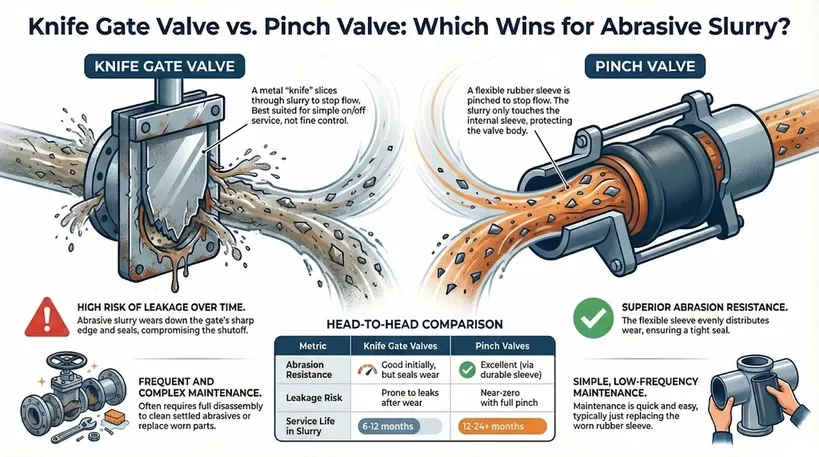
Both the knife gate valves and heavy-duty pinch valves are designed for long-lasting operation and are ideal where shut-off and control applications involve abrasive or corrosive slurries and powders or coarse media. Nevertheless, in some comparison scenarios, the knife gate valve vs pinch valve debate mainly centers on longevity amid harsh conditions like mining tailings, […]

Wet cement is sticky which is why it must be removed properly from storage silos in processing plants. This method is called “pneumatic conveying,” where compressed air pushes cement through pipes. However, powders and granules can clog or block valves. To avoid this, powder handling valves like pinch valves are vital, as they reduce material […]
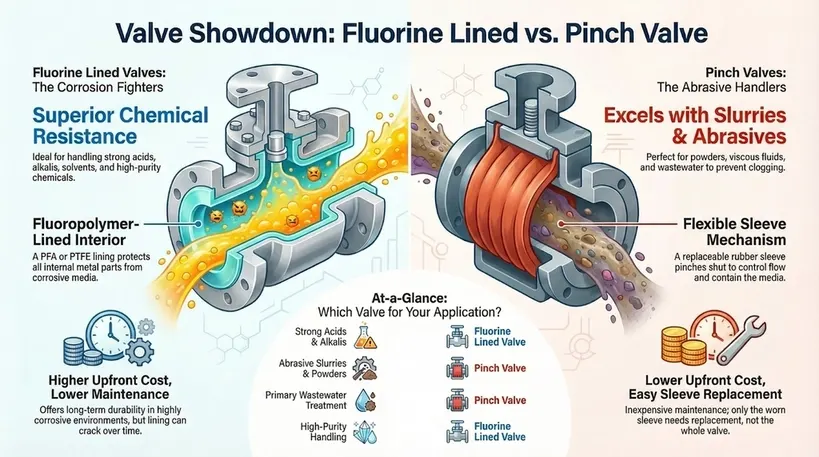
One of the major concerns faced by pipeline systems in chemical, electric power, pharmaceutical, and other industries is corrosive media, such as strong alkalis, acids, and organic solvents. Chemical valves, like fluorine lined and pinch valves, are designed to prevent leaks, extend equipment life, and ensure production safety. Pinch valve for chemical processing is commonly […]
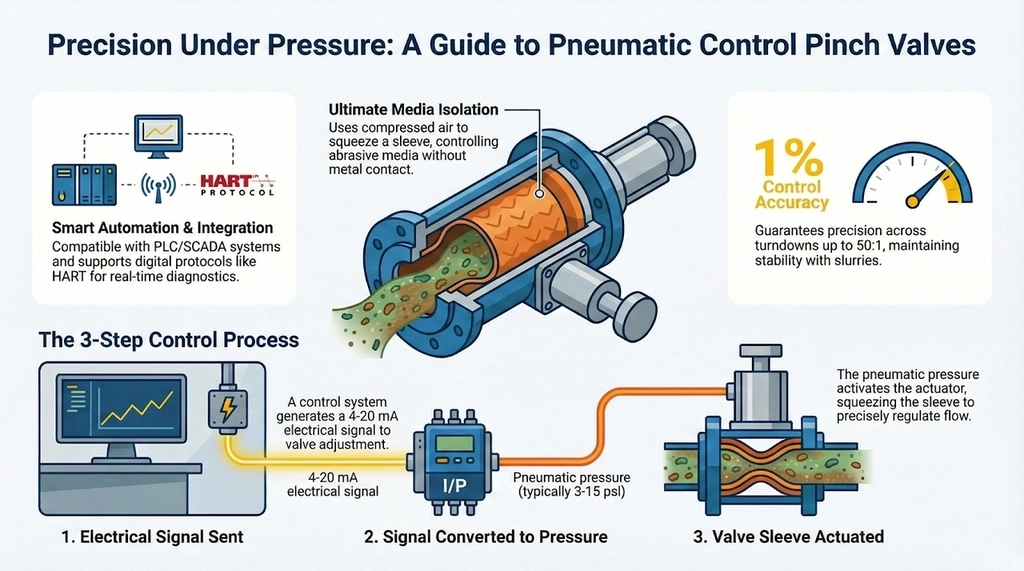
Industrial automation systems require valves that deliver precise flow control without compromising reliability in corrosive or abrasive media. A pneumatic control pinch valve excels as a modulating control valve, enabling precise flow to control pressure, temperature, or fluid levels. Using compressed air to gradually adjust the valve position allows smooth process control in mining, wastewater, […]