

Valves are everywhere in industrial processes—controlling flow, isolating equipment, and protecting systems from overpressure. Yet for many engineers and technicians, the range of options can feel overwhelming. This guide covers the fundamentals of industrial valves, with a closer look at three widely used types: the lined valve, the pinch valve, and the stainless steel ball […]

An industrial pinch valve controls slurry, sludge, powder, granules, and corrosive flow by compressing a flexible sleeve. The media stays inside the sleeve, which helps reduce contact with the valve body and actuator parts. So, what are pinch valves used for in industrial systems? They are commonly used where the media contains solids, fibers, abrasive […]

This guide explains where single-basket filtration works best and how to choose the right setup for plant flow. A simplex strainer fits lines that can stop for short cleaning. It catches dirt, rust, scale, and hard bits before they reach pumps, valves, and meters. This helps protect parts and keep the flow clean. Lianke Valve supplies […]

Choosing the wrong lining for a chemical valve in acid service is an expensive mistake. The wrong coating cracks, contaminates your process fluid, or fails under pressure — sometimes all three. Two coatings dominate this space: glass lining and fluorine lining (PFA). Both work. But they suit different conditions, and specifying the wrong one costs […]

Backflow is one of those problems that looks minor on paper but can shut down an entire process line in practice. A check valve is the simplest fix. It lets fluid move in one direction and stops it from reversing. But walk into any valve supplier’s catalog, and you’ll quickly face a choice: swing check […]
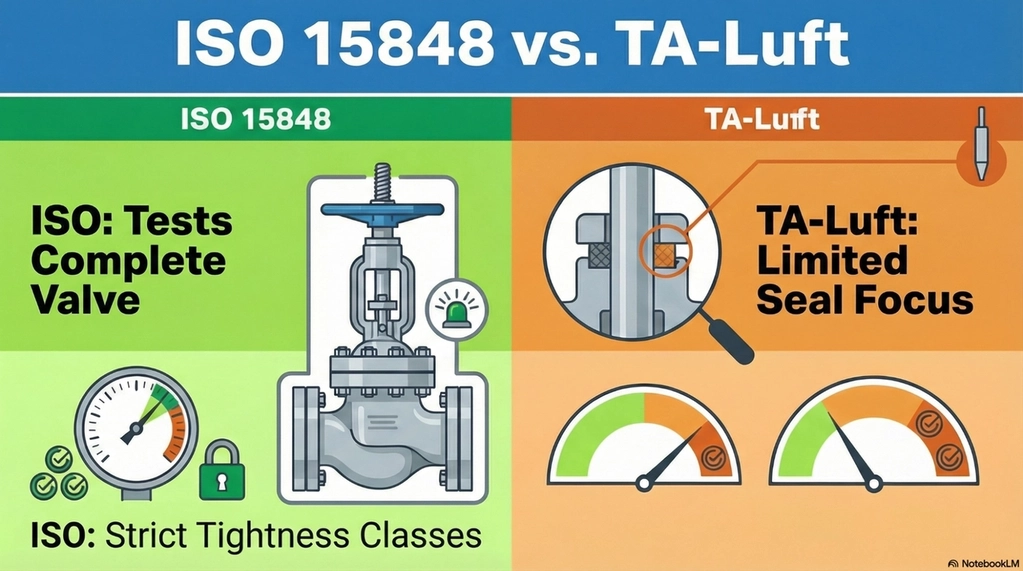
Lined valve low fugitive emission solutions help regulate unintended gas leaks from valves, pumps, and other industrial equipment. These releases can negatively impact environmental safety and regulatory compliance. Therefore, facilities must choose appropriate testing standards to ensure their valve systems remain tight. This guide compares ISO 15848 and TA-Luft to help determine which fugitive emission […]
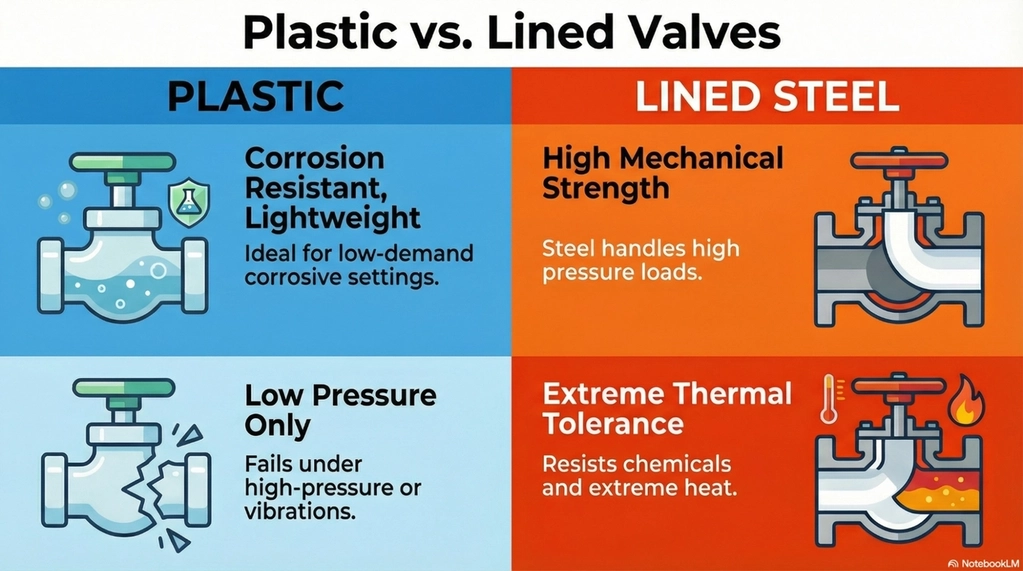
Choosing the right piping components directly affects system efficiency in flow regulation and personnel safety in the chemical processing industry. Therefore, understanding material properties helps engineers prevent leaks and premature wear in industrial lines. This guide outlines the technical distinctions between plastic vs PTFE/PFA lined ball valves to help you make informed decisions for different […]

PTFE lined butterfly valve and hard seal butterfly valve differ in terms of performance characteristics in industrial flow control components. Therefore, engineers must choose an accurate design to prevent process failures and leakages. This article clarifies which valve suits particular piping requirements and operational conditions. Defining PTFE and Hard Seal Butterfly Valves PTFE (Polytetrafluoroethylene) lined […]

Corrosive media refer to liquids, gases, or vapors that cause chemical damage to materials upon contact—destroying metal, plastics, and other substrates. Handling such conditions requires precise matching of materials to specific operational conditions. No single material is the “most ideal” for all corrosive media, but rather depends on the specific chemicals, temperatures, and concentration in […]

Pinch valves are used in most industries, such as in wastewater, pharmaceuticals, chemical, mining, cement, and others. In these industries, the pinch valve rubber sleeve is a critical component that determines the safety and operational success. For abrasive slurry applications, the correct pinch valve sleeve material relies on mechanical and chemical endurance. In this guide, […]


