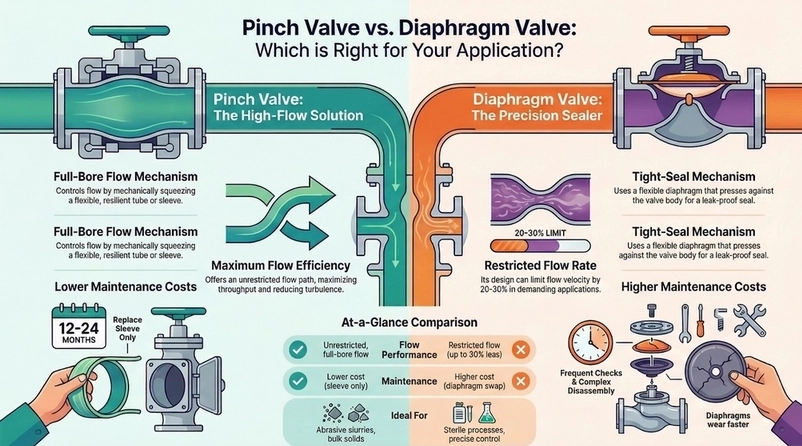
Slurries pose risks in industrial piping as they blend liquids with abrasive solids that erode components rapidly. Although válvulas de esfera for slurry applications may seem ideal thanks to their quarter-turn operation that provides quick shut-off, it often experiences rapid wear when used in systems with debris or abrasive particles, leading to leaks or valve failure.
In this guide, we will delve into the working performance and the problems with ball valves in slurry that lead to frequent failures and increased costs and downtime—while providing you with better options for it.
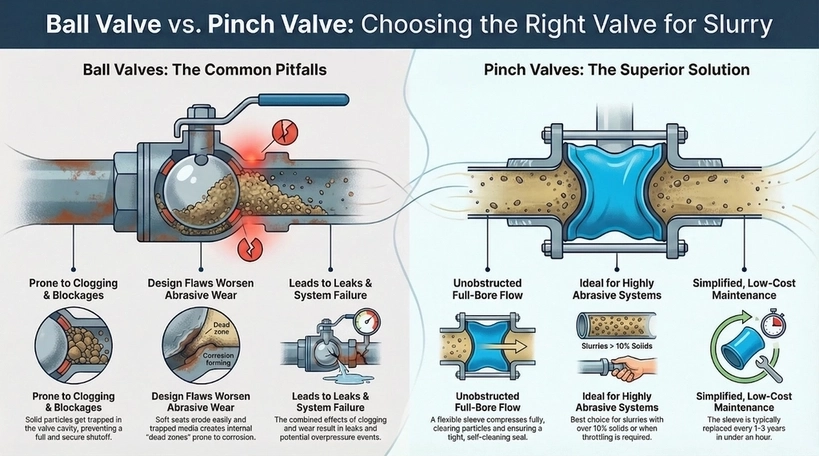
Clogging in ball valves occurs when solid particles settle in the cavity between the ball and body during partial closure, forming blockages and causing poor operation and internal leakage over time. These problems with ball valves in slurry increase with high-solid content , where media attaches to valve seats, preventing full shutoff and risking system overpressure.
Instead, install a Y-strainer or other pre-filtration equipment upstream to trap solid debris before it reaches the valve. It is also necessary to conduct regular flushing and maintenance of the valve area for long-term and stable operation.
Ball valves depend on soft seats that deform when in contact with slurries, leading to bypass and erosion. Unlike a full port flow valve, residual media trapped in the ball pocket creates dead zones prone to corrosion. For pulsating flows common to pumps, vibrations worsen seat wear, making ball valves unreliable for long-term operation in mining, wastewater, or mineral processing.
To minimize these, choose válvulas de esfera de aço inoxidável (such as 304 or 316 grades), like those in LIANKE that offer fire prevention and anti-static features with smooth, low-torque performance, or special alloy ball valves depending on the specific media features. A strainer or filter could also be installed to reduce contamination of solid particles and protect the valve internals.
Pinch valves remove particles by compressing a flexible sleeve fully across the bore, ensuring tight shutoff without obstructing flow. In contrast, using ball valves in slurry systems can be tough as they suffer from clogging, uneven wear, and leakages. This makes pinch valves an ideal full port flow valve with minimal turbulence, outperforming ball valves.
Select pinch valves over other valves when handling slurries above 10% solids, high abrasives, or when a throttling operation is needed. Standard models operate to 250°F, with special versions from −100°F to 550°F. Pressure ratings vary by size (15–100 psig), with special designs up to 300 psig. However, avoid pinch valves if they involve high-pressure isolation that exceeds sleeve ratings; otherwise, their self-cleaning action outperforms seated valves prone to buildup.
Moreover, the pinch valve maintenance schedule depends on the application, media type, cycling frequency, and operating conditions. Typically, it lasts 1-3 years with sleeve inspections every 3-6 months. Abrasive materials reduce their lifespan, but replacements may only apply to the sleeves and can be done in under an hour with no special tools needed.
Selecting the right valve is vital to ensure system efficiency, safety, and durability. Ball valves are considered less ideal compared to pinch valves against slurries and abrasive media due to clogging, wear, and leakage concerns. However, they may be minimized by choosing high-quality ball valves like special alloy or stainless steel.
Regardless, LIANKE offers a variety of stainless steel ball valves and pinch valves, designed according to international standards, including visual inspection, sealing performance, operational performance, and pressure resistance to ensure their safety, reliability, and normal operation.
Discover our strict quality control and state-of-the-art facilities ensuring the highest standard for every valve.
Explore Process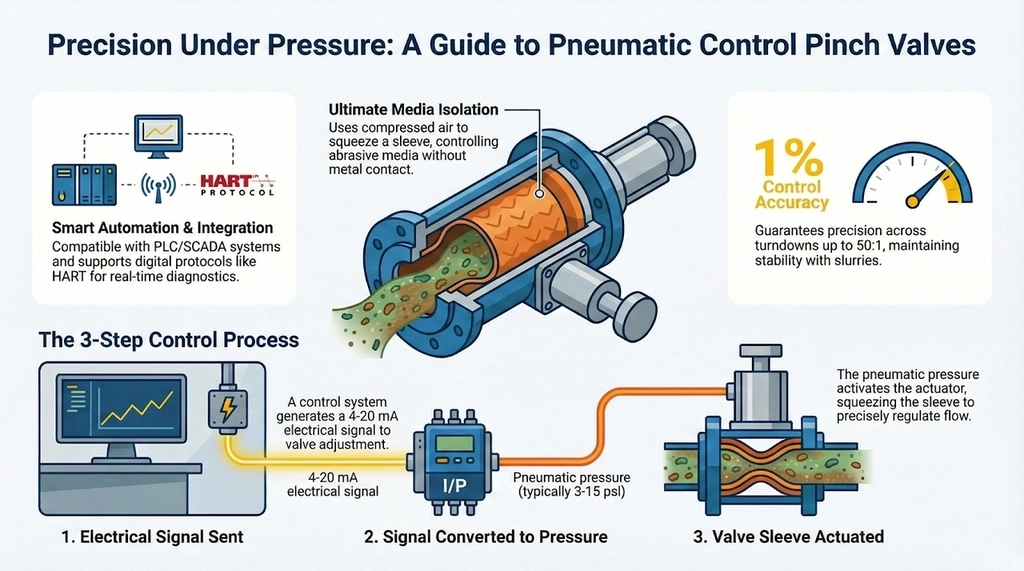
Industrial automation systems require valves that deliver precise flow control without compromising reliability in corrosive or abrasive media. A pneumatic control pinch valve excels as a modulating control valve, enabling precise flow to control pressure, temperature, or fluid levels. Using compressed air to gradually adjust the valve position allows smooth process control in mining, wastewater, […]
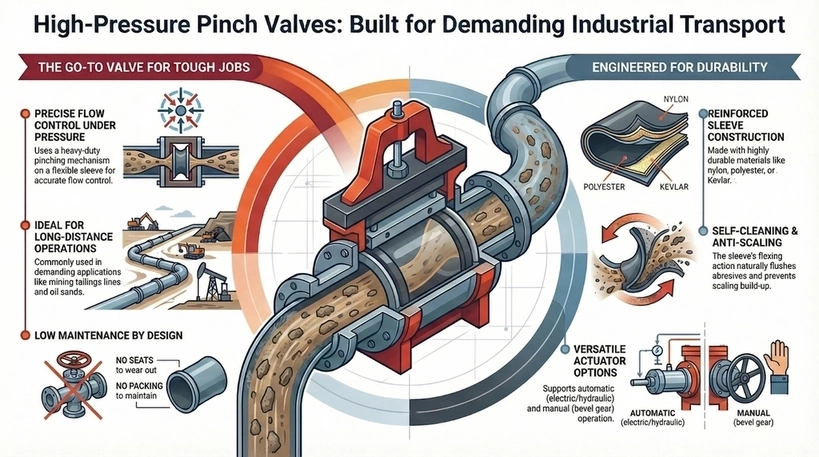
High pressure pinch valves, like PN16 pinch valve and class 150 pinch valve designs, involve a rugged and heavy-duty pinching mechanism in positioning the sleeve, resulting in an almost accurate and measurable flow of media. This kind of valve is popular and commonly used for long distance operations in mining tailings lines or oil sands, […]
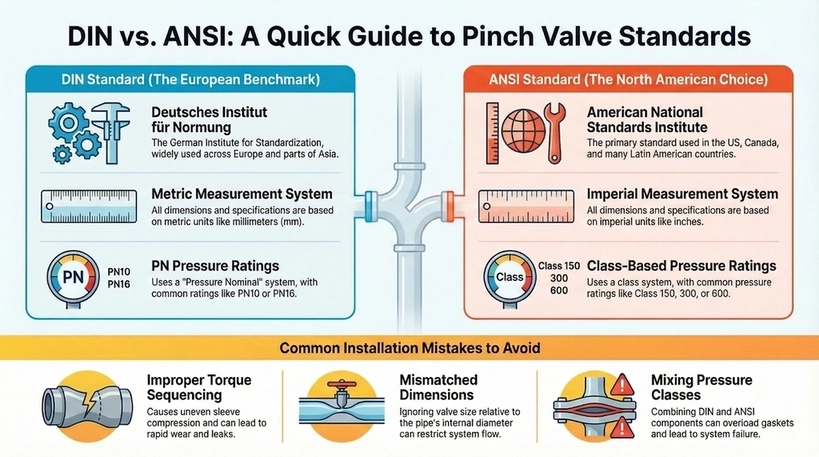
Understanding pinch valve dimensions and flanges ensures seamless integration into piping systems, particularly when choosing between DIN vs ANSI. The two are different but commonly used standards by organizations in engineering, manufacturing, and product design. DIN was developed in Germany but widely adopted across Europe and parts of Asia. Meanwhile, ANSI standards, which originate from […]
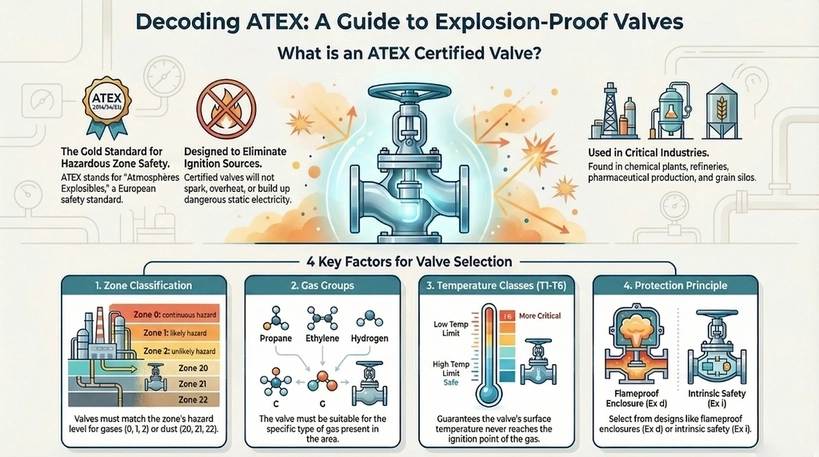
Selecting the appropriate explosion proof valve is essential for safety in industries that pose explosion risks. ATEX certified valves guarantee compliance with European standards, preventing ignition sources from heat, sparks, or static electricity. This blog explores key factors for choosing ATEX certified explosion proof valves that ensure overall operational safety, highlighting the entailed regulations and […]