Choosing the right piping components directly affects system efficiency in flow regulation and personnel safety in the chemical processing industry. Therefore, understanding material properties helps engineers prevent leaks and premature wear in industrial lines.
This guide outlines the technical distinctions between plastic vs PTFE/PFA lined ball valves to help you make informed decisions for different flow control applications.
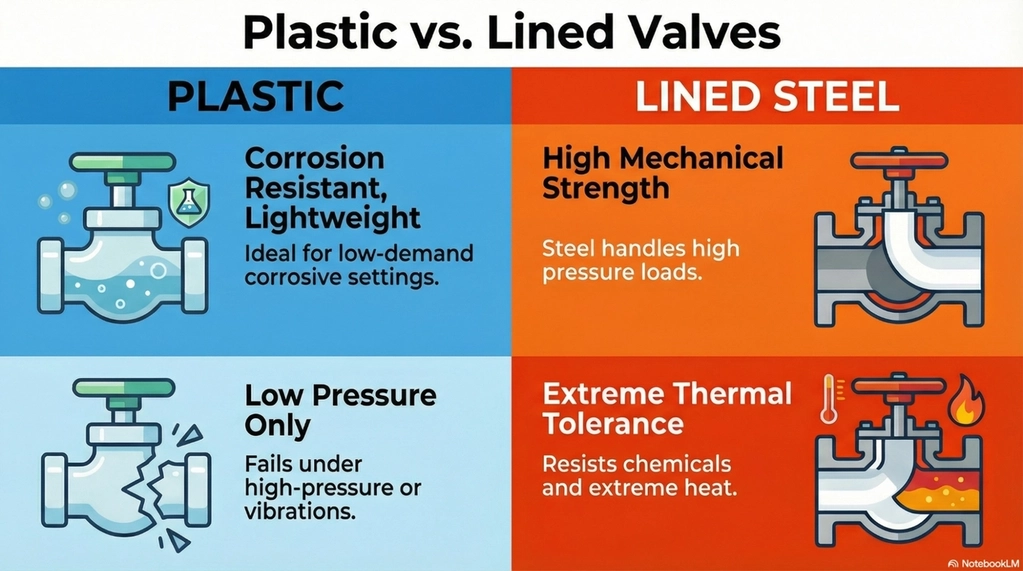
Solid thermoplastic valves provide distinct pros and cons for specific and low-demand environments. They utilize materials like PVC (Polyvinyl Chloride), CPVC (Chlorinated Polyvinyl Chloride), PP (Polypropylene), or PVDF (Polyvinylidene Fluoride), each of which each have their own physical attributes and application cases.
Lined steel valves integrate the mechanical strength of metal with chemical-resistant liners. Among the most widely-used materials in industrial fields are PTFE (Polytetrafluoroethylene) and PFA (Perfluoroalkoxy), both known for their superior chemical resistance and flexibility across different environments.
PTFE, also known as Teflon, has an exceptional chemical resistance, high thermal tolerance, and low friction coefficient. These make them an indispensable material in the production of PTFE lined valve systems used in industries, such as chemical processing and pharmaceuticals.
On the other hand, PFA lined ball valves share many similarities with PTFE but provide more enhanced flexibility, improved crack resistance, and transparency. These make them an ideal choice for demanding environments where mechanical stress and chemical exposure are prevalent, including semiconductor manufacturing and corrosive gas handling.
Although both materials excel in areas like extreme temperatures and aggressive chemicals, their distinctions make them ideal also for different industrial scenarios. The choice between a PFA and PTFE valve depends on specific operational requirements, including system rigidity, environmental conditions, and expected service life.
By understanding the performance characteristics of PTFE and PFA, engineers and manufacturers can make informed decisions that support optimal performance, safety, and long-term cost efficiency in fluid control systems.
Temperature and pressure ratings differ significantly between these valve construction methods. Plastics have a narrow operational efficiency because of their polymeric nature, while metal-housed lined control valves extend these limits by transferring mechanical loads to the steel shell.
Compliance with the Valve Pressure Test Standard API 598 is also mandatory for these units. This is the industry standard for inspecting and pressure-testing metal-seated or soft-seated valves. The following are its testing procedures, and valves failing these cannot guarantee the safety of the piping system:
Discover our strict quality control and state-of-the-art facilities ensuring the highest standard for every valve.
Explore ProcessChoosing between plastic and lined steel valves depends on various factors. Plastic valves are ideal in non-critical and low-pressure applications, while lined steel valves offer the necessary strength for demanding environments. Selecting the right one needs balancing safety requirements, cost, and long-term maintenance needs.
Lianke is a professional lined valve manufacturer. We handle the entire process in-house, from CNC machine to PTFE/PFA lined ball valve and pressure testing. We produce more than 50,000 units yearly, serving global EPC clients with delivery as fast as seven days. Ultimately, we support OEM customization and adhere to global standards (ANSI, DIN, and JIS).

Valves are everywhere in industrial processes—controlling flow, isolating equipment, and protecting systems from overpressure. Yet for many engineers and technicians, the range of options can feel overwhelming. This guide covers the fundamentals of industrial valves, with a closer look at three widely used types: the lined valve, the pinch valve, and the stainless steel ball […]

Valve installation looks simple on paper—until you’re on-site, the flanges don’t line up, and the process fluid is waiting. In reality, poor installation is one of the leading causes of premature valve failure, leakage, and costly downtime. Whether you’re working with a lined valve, a strainer, or a pinch valve, the same fundamental rules apply. […]

Lianke Valve Co., Ltd. has just wrapped up a busy and rewarding season of site visits. Over the past two weeks, we have hosted several groups of clients from home and abroad. They came with different goals, yet all turned their attention to Lianke’s manufacturing strength and technical expertise. Juhua Group, Quzhou In early March, […]

Recently, the production workshop at Lianke Valve has been bustling with activity, where production, inspection, packaging and other processes operate in efficient coordination. After rigorous multi-stage quality checks, a batch of high-quality pinch valve products has been packed and shipped, setting off for Russia. Export Product Case The pinch valves in this bulk shipment are […]