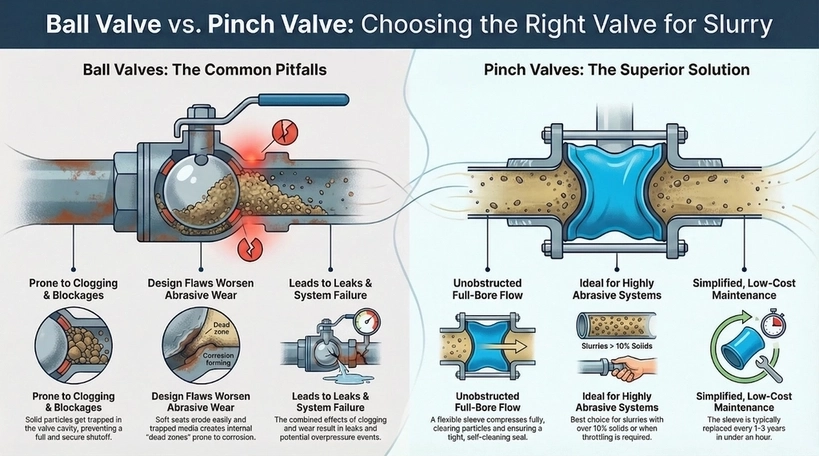
Both the knife gate valves and heavy-duty pinch valves are designed for long-lasting operation and are ideal where shut-off and control applications involve abrasive or corrosive slurries and powders or coarse media.
Nevertheless, in some comparison scenarios, the knife gate valve vs пережимной клапан debate mainly centers on longevity amid harsh conditions like mining tailings, minerals, and wastewater treatment. Hence, in this blog, we will delve into the differences between the two and which lasts longer in abrasive slurry conditions to help you make an informed decision in selecting the correct abrasion-resistant valve types to minimize downtime and replacement costs.
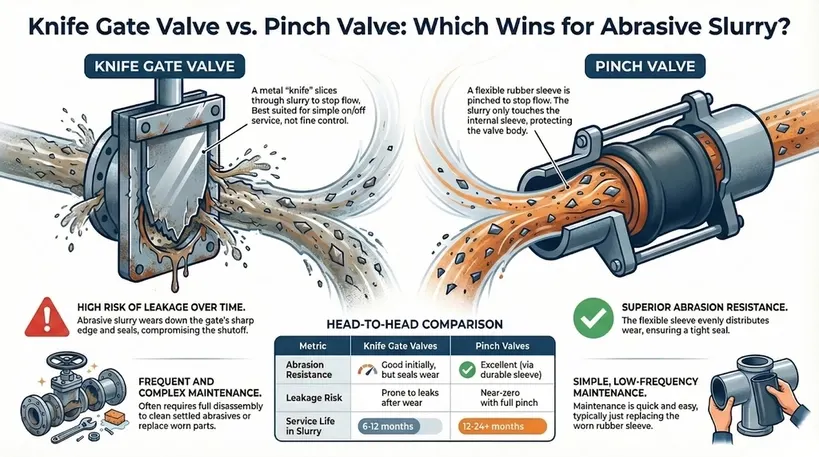
Knife задвижки utilize a sharpened disc (called a “knife”) that slides down to cut through the media and stop flow. The gate lifts when open to allow slurry to pass through. These valves are ideal for on/off service but don’t work well for control or throttling due to wear and potential leakage.
Pinch valves use a flexible rubber sleeve that is pinched closed or compressed to stop the flow. It is mainly used in mining industries because the slurry only contacts the valve sleeves, protecting the rest of the internal body from any abrasion.
In LIANKE, we provide a wide range of elastomer sleeve materials, including Natural Rubber (for abrasion), EPDM (for chemicals), Neoprene, and food-grade options, that are ideal for various applications with minimal downtime.
Knife gate valves feature a sharp blade that slices through slurries, but knife gate leakage problems are a major concern as abrasion wears seats and edges, compromising the seal in the long run. In contrast, pinch valves compress a flexible sleeve around the slurry, fairly distributing the wear without raising potential risk for buildup.
In terms of sealing and maintenance, a zero dead volume valve like the pinch removes areas where abrasives settle, offering a self-cleaning action. Pinch valve for powder handling and slurries excels due to replaceable sleeves, which quickly restore full function after wear. Meanwhile, knife gates usually need to be disassembled for cleaning, increasing the leakage problems due to warped blades or degraded packing.
Additionally, when talking about flow dynamics and pressure handling, knife gates are better in handling higher pressures through robust steel builds, but their seals may falter in prolonged abrasive exposure. Pinch valve pressure drop, however, stays minimal in open positions due to full-bore flow, preserving pump efficiency and tight shutoff without leakage.
| Aspects | Knife Gate Valves | Pinch Valves |
| Стойкость к истиранию | Good at first but seals could wear in the long run | Excellent via durable and appropriate sleeves |
| Maintenance Frequency | High, frequent rebuilds | Low, only sleeve swaps |
| Leakage Risk | Prone after wear | Near-zero with full pinch |
| Service Life in Slurry | Typically 6-12 months | 12-24 months or more |
Valve failures in slurry lines are expensive and may cause harm, but choosing the right valve type can significantly reduce downtime. Pinch valves are better and last longer than knife gates against abrasive slurries through sleeve resilience and zero dead volume design.
ЛИАНКЕ is one of the top pinch valve manufacturers worldwide, offering a wide range of sizes ranging from 1/2″ (DN15) to 24″ (DN600), with custom sizes available upon request. Ignited through excellence, we continue to provide products that meet rigorous industry standards and quality certifications to ensure optimal performance and safety.
Discover our strict quality control and state-of-the-art facilities ensuring the highest standard for every valve.
Explore Process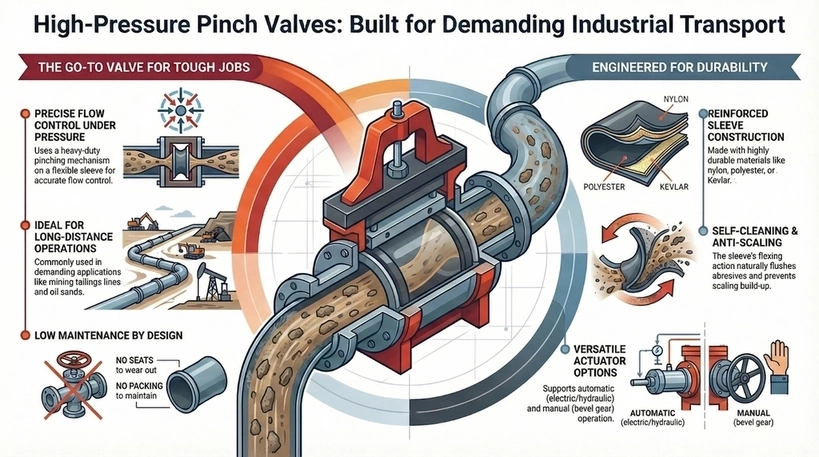
High pressure pinch valves, like PN16 pinch valve and class 150 pinch valve designs, involve a rugged and heavy-duty pinching mechanism in positioning the sleeve, resulting in an almost accurate and measurable flow of media. This kind of valve is popular and commonly used for long distance operations in mining tailings lines or oil sands, […]
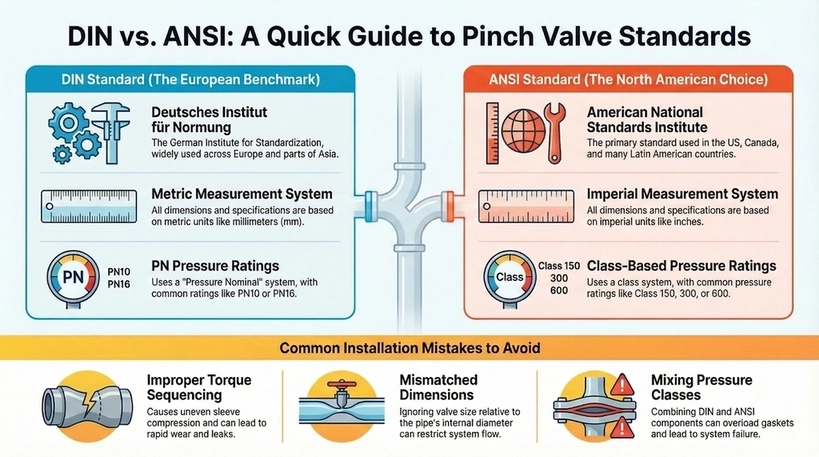
Understanding pinch valve dimensions and flanges ensures seamless integration into piping systems, particularly when choosing between DIN vs ANSI. The two are different but commonly used standards by organizations in engineering, manufacturing, and product design. DIN was developed in Germany but widely adopted across Europe and parts of Asia. Meanwhile, ANSI standards, which originate from […]
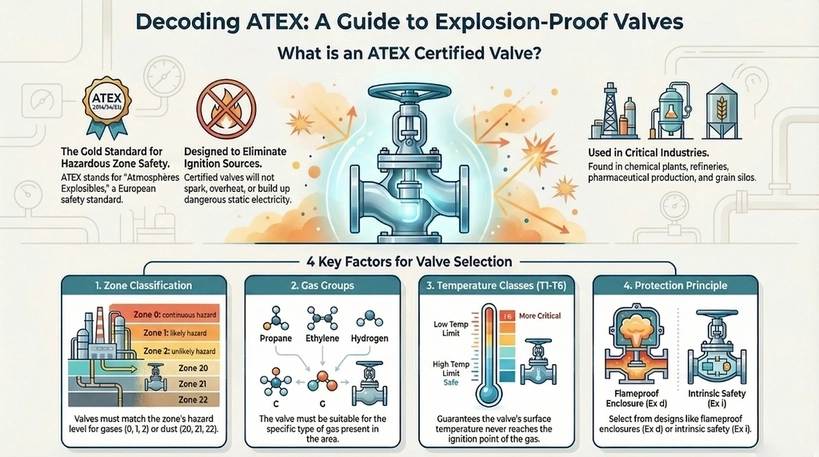
Selecting the appropriate explosion proof valve is essential for safety in industries that pose explosion risks. ATEX certified valves guarantee compliance with European standards, preventing ignition sources from heat, sparks, or static electricity. This blog explores key factors for choosing ATEX certified explosion proof valves that ensure overall operational safety, highlighting the entailed regulations and […]
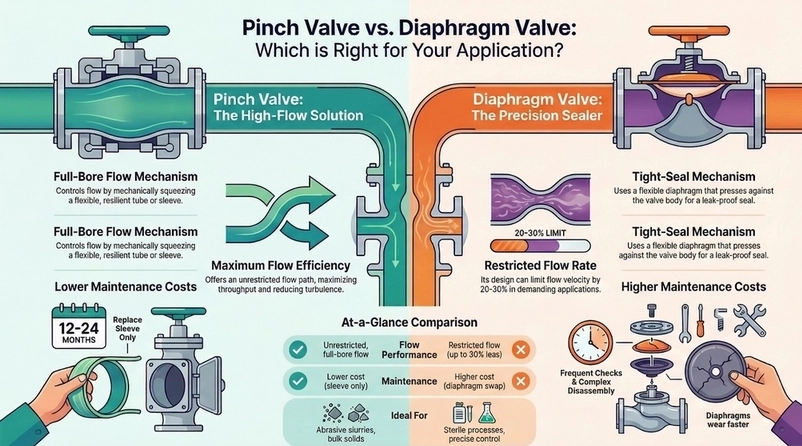
When handling abrasive or viscous media in industrial processes, the type of valve used can heavily affect the performance, efficiency, and overall user experience. In relation to this, two of the most common valve options are pinch and diaphragm valves. In this blog, we delve into the pinch valve vs diaphragm valve discussion, analyzing flow […]