Yes, they are. Hygienic pinch valves are specially designed to keep things clean and safe, which is why they’re so common in food, pharmaceutical, and biotech environments. Their smooth interior and dead-zone-free design make cleaning quick and reliable. And if the term is new to you, don’t worry, this article will walk you through what hygienic pinch valves are, how they operate, and why they’re a great fit for sanitary workflows.
As we explore how they work, we’ll also look at valve alternatives, give a brief pinch valve comparison, and touch on where pinch valves fit among the many types of control valves used in modern processing systems.
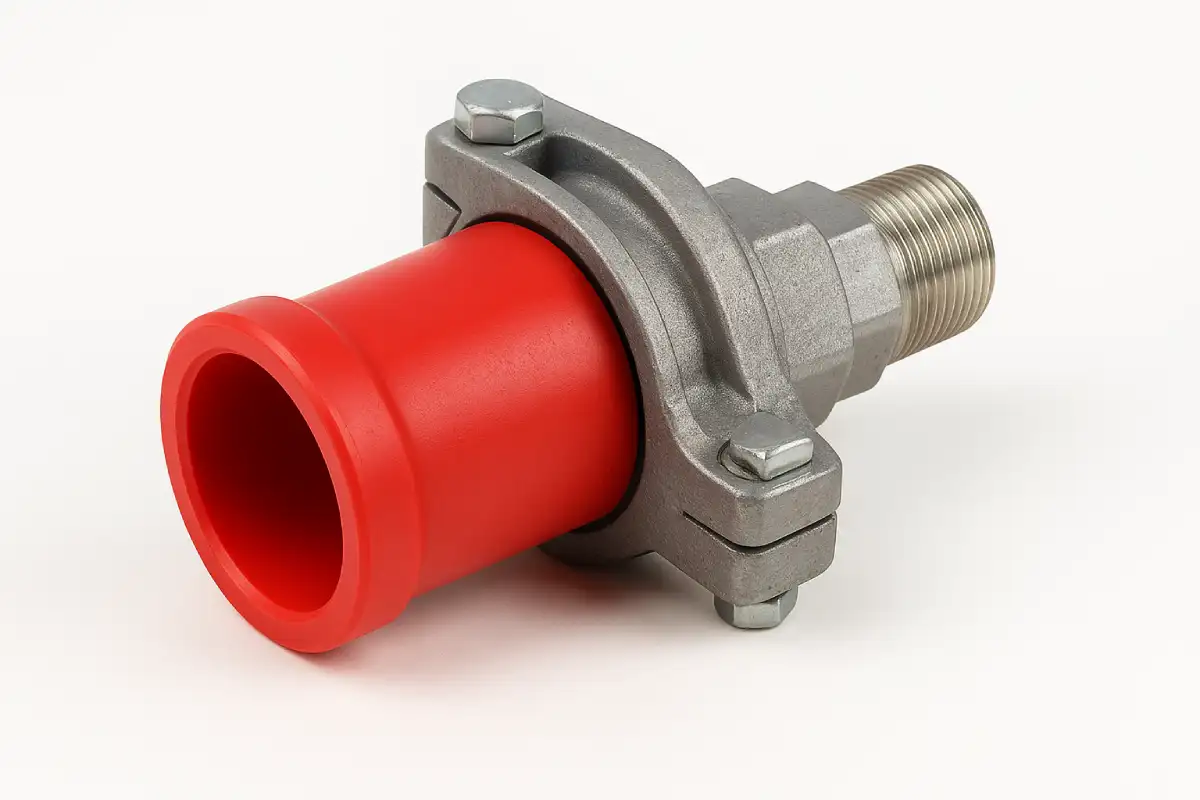
A hygienic pinch valve is a specialised valve used to control the flow of liquids or powders without contaminating them. The secret lies in its simple, smart design: it uses a flexible elastomer sleeve inside a metal housing. When compressed by air or mechanical force, the sleeve “pinches” shut, cleanly and securely cutting off flow.
Three Key Takeaways:
Sanitary pinch valves are specifically designed for environments where equipment must be cleaned without disassembly. That’s where CIP (Clean-in-Place) pinch valves come in.
These valves are:
For example, VMCE aseptic pinch valves meet EHEDG Type EL ASEPTIC Class I standards, offering sterile shutoff and ultra-clean surfaces.
In aseptic processes, preventing microbial contamination is critical. That’s why the aseptic pinch valve has become a top choice. With piggable and bacteria-tight features, these valves support fully enclosed and sterilizable systems.
They’re common in:
Here’s what makes these valves a hygienic hero:
| Recurso | Benefit |
| Manga de borracha | Only the sleeve contacts the product. |
| Full-bore design | No flow restriction = no residue. |
| No dead zones | Eliminates trapped particles. |
| Tri-clamp connections | Tool-free maintenance and secure seals. |
| Electropolished surface | Smooth finish reduces microbial risk. |
Producers such as Lianke utilize stainless steel 1.4408 or 1.4404 for valve housings and finish the interiors to a Ra of 0.8 μm to ensure superior cleanability.
Ensure aseptic conditions with our full-bore Pneumatic Pinch Valves. The simple sleeve design eliminates dead zones, making it ideal for CIP/SIP processes.
View Pinch Valve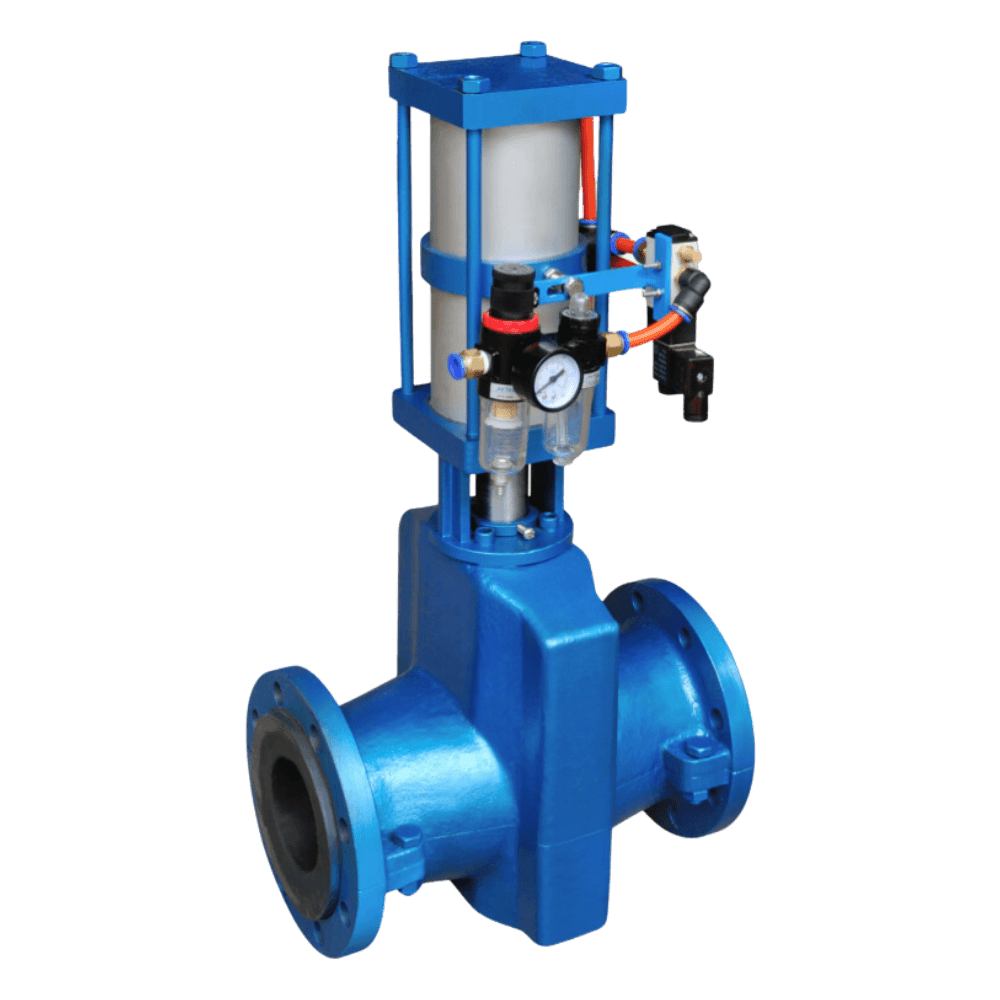
When evaluating valve alternatives for hygienic applications, pinch valves often stand out for their simplicity and ease of cleaning. In a quick pinch valve comparison, diaphragm valves, ball valves, and butterfly valves all have multiple internal components that come into contact with the product, which can introduce crevices or require more intensive cleaning.
Válvulas pneumáticas de aperto, on the other hand, rely on a single elastomer sleeve, with no complex internal geometry or hidden pockets. Among all types of control valves, pinch valves are especially valued in sanitary settings because they provide full-bore flow, zero dead zones, and minimal contamination risk.
Ensure aseptic conditions with our full-bore Pneumatic Pinch Valves. The simple sleeve design eliminates dead zones, making it ideal for CIP/SIP processes.
View Pinch Valve
For clean and reliable flow control, hygienic pinch valves are hard to beat. They keep your product safe, make upkeep simple, and follow international sanitary standards. And if you need a supplier you can count on, Válvula Lianke has been making quality valves since 1982. Check out our lineup of hygienic pinch valves to find the right fit for your operation.
Discover our comprehensive guide to pinch valve technology.
Explore Manufacturing Capabilities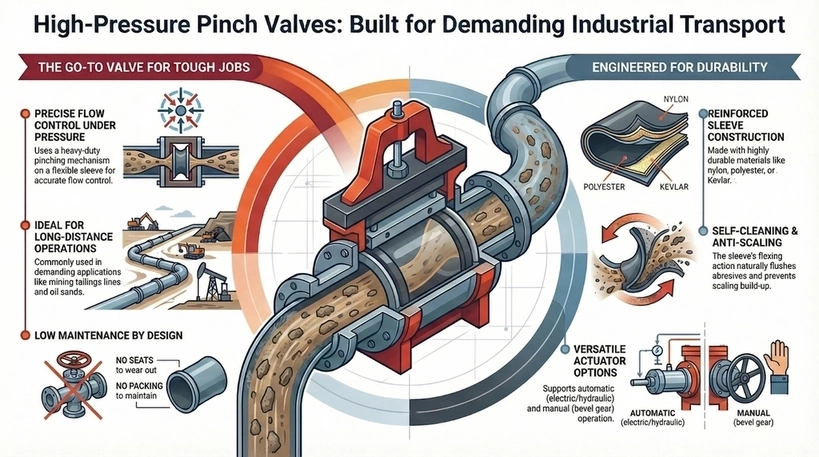
High pressure pinch valves, like PN16 pinch valve and class 150 pinch valve designs, involve a rugged and heavy-duty pinching mechanism in positioning the sleeve, resulting in an almost accurate and measurable flow of media. This kind of valve is popular and commonly used for long distance operations in mining tailings lines or oil sands, […]
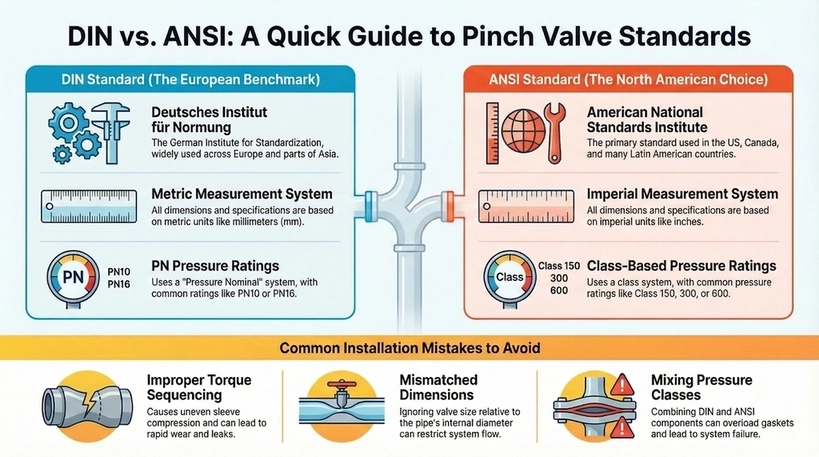
Understanding pinch valve dimensions and flanges ensures seamless integration into piping systems, particularly when choosing between DIN vs ANSI. The two are different but commonly used standards by organizations in engineering, manufacturing, and product design. DIN was developed in Germany but widely adopted across Europe and parts of Asia. Meanwhile, ANSI standards, which originate from […]
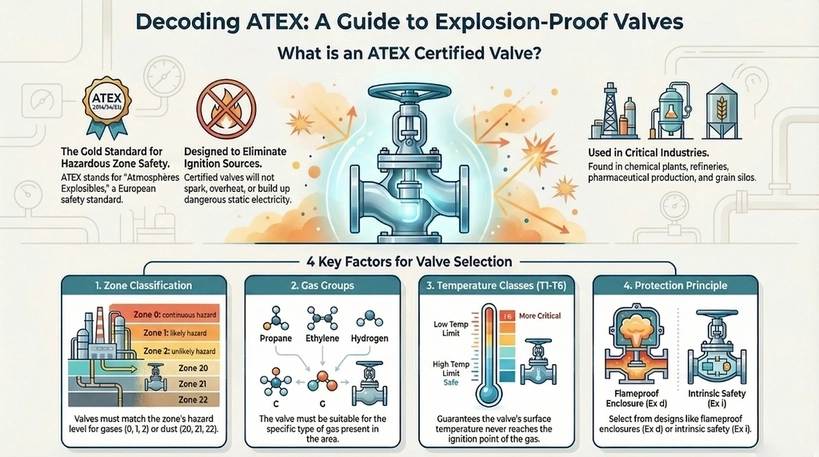
Selecting the appropriate explosion proof valve is essential for safety in industries that pose explosion risks. ATEX certified valves guarantee compliance with European standards, preventing ignition sources from heat, sparks, or static electricity. This blog explores key factors for choosing ATEX certified explosion proof valves that ensure overall operational safety, highlighting the entailed regulations and […]
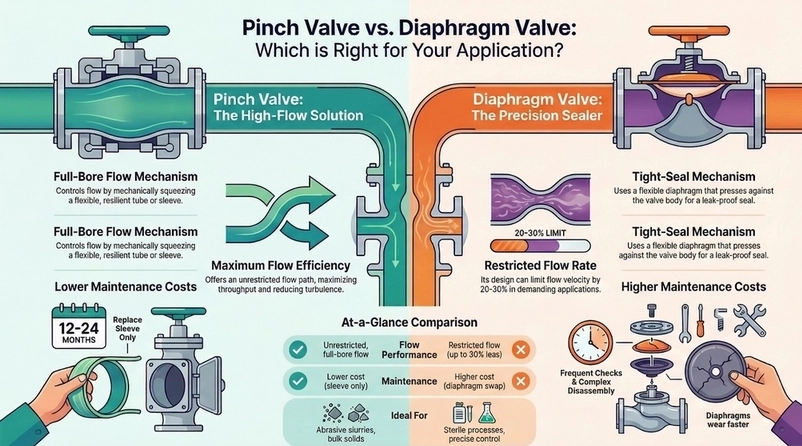
When handling abrasive or viscous media in industrial processes, the type of valve used can heavily affect the performance, efficiency, and overall user experience. In relation to this, two of the most common valve options are pinch and diaphragm valves. In this blog, we delve into the pinch valve vs diaphragm valve discussion, analyzing flow […]