

Triple-offset butterfly valves are improved flow-control mechanisms that have three radial offsets for better sealing and efficiency while performing difficult operations. The design is friction-free, so it guarantees no leakage and high reliability for extreme pressures and temperatures.
Lianke Valve, a foremost player in the industry, has modified this technology in its fluorine-lined butterfly valve series to provide all-round solutions to tough industrial processes. This guide presents the technical dimensions, functions, and the advantages of the triple-offset butterfly valves to assist potential consumers in making the best possible choices for their intentions.
Key Takeaways:
The triple-offset design for a butterfly valve proves to be revolutionary in the advancements in technology for a butterfly valve. Allow us to explain how the three offsets are integrated:
First Offset: The centerline of the shaft is located to the rear of the casing’s centerline
Second Offset: The center of the shaft is located to the rear of the center sealing surface
Third Offset: The seal surfaces that face each other are created in rounded conical shapes.
The ornate shapes provide a cam mechanism that ensures that sealing surfaces do not touch each other until the last few degrees of the closing movement, thus minimizing wear and tear and increasing the life of the valves.

Various industries have more and superior uses for the triple-offset butterfly valve, mainly in regions where ordinary valves are unable to function optimally:

Lianke Valve makes fluorine-lined butterfly valves that have heated features in the industry such as:
The design of a triple-offset butterfly valve ensures that the given engineering standards are implemented that facilitate the best possible combination. Lianke valves fluorine-lined butterfly valves, like all the other valve manufacturers’ products, are designed to meet the requirements of the relevant international standards: GB/T12238 and API 6D – which assures the quality and uniformity of the product.
Body Materials: WCB, CF8, CF3, CF8M, CF3M
Lining Options: FEP, PFA, PTFE
Temperature Ranges:
Triple Offset: Metal-on-metal seal construction with no possible way for leakage to occur
Traditional: Employs soft seats and uses a friction seal
Triple Offset: No need for maintenance since there are no frictional forces
Traditional: Regular maintenance due to wear and tear
Triple Offset: Capable of withstanding severe service conditions
Traditional: Can only be used in moderate service conditions

Ensuring regular maintenance prolongs the efficiency of a unit:
In determining the types of triple-offset butterfly valves, the following should be considered:
The Lianke Valve Company introduces innovations in:
For further inquiries on Lianke Valve triple-offset butterfly valves:
Frequently Asked Questions regarding Triple Offset Butterfly Valve:
Thanks to the fluorine lining, the valve body is encased in a protective layer against corrosion and abrasion. Such enhancements add considerably to the operational lifespan of the valve.
All Lianke Valve’s fluorine-lined butterfly valves can work with manual, electric, pneumatic, or hydraulic actuators depending on the application.
Yes, there are various ranges depending on the lining material used: FEP (–29℃ to 120℃), PFA (–29℃ to 180℃) PTFE (–29℃ to 150℃).
The advent of triple-offset butterfly valve designs has seen industrial control of flow processes revolutionized. The use of technology in Lianke Valve’s fluorine-lined butterfly valves is commendable as the company remains true to its mission and promises of practicality.If you would like to know more about the application of these and other advanced valve solutions in your processes, take a look at Lianke Valve’s product catalog or get in touch with their technical support team. We can help you in choosing the appropriate valve.
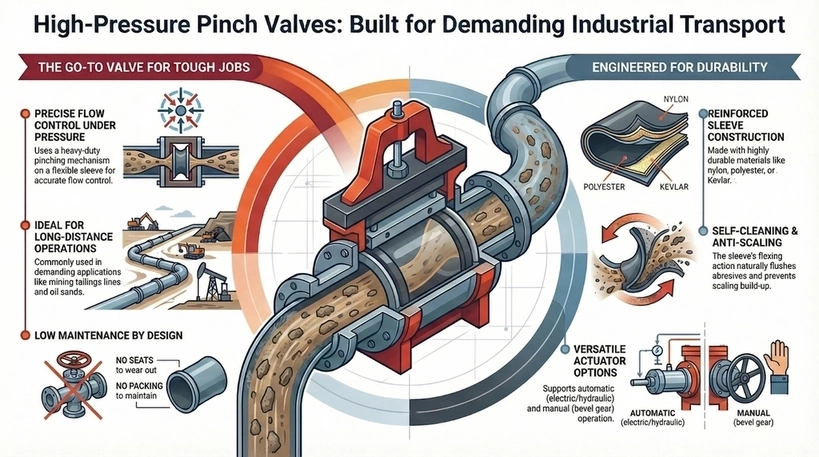
High pressure pinch valves, like PN16 pinch valve and class 150 pinch valve designs, involve a rugged and heavy-duty pinching mechanism in positioning the sleeve, resulting in an almost accurate and measurable flow of media. This kind of valve is popular and commonly used for long distance operations in mining tailings lines or oil sands, […]
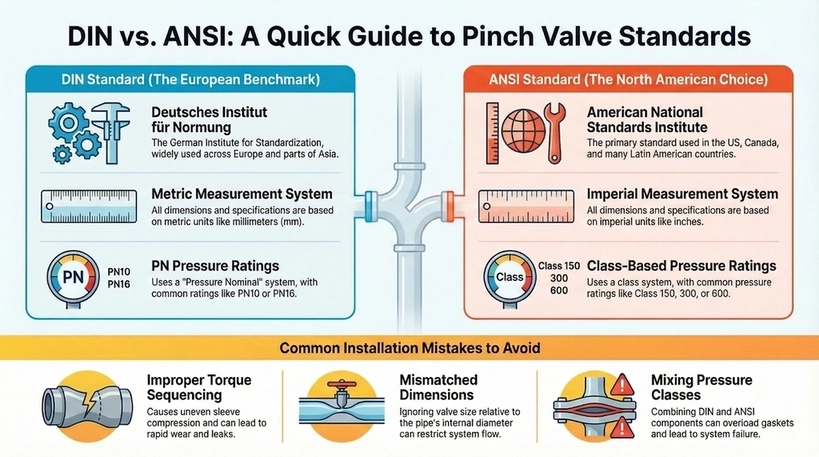
Understanding pinch valve dimensions and flanges ensures seamless integration into piping systems, particularly when choosing between DIN vs ANSI. The two are different but commonly used standards by organizations in engineering, manufacturing, and product design. DIN was developed in Germany but widely adopted across Europe and parts of Asia. Meanwhile, ANSI standards, which originate from […]
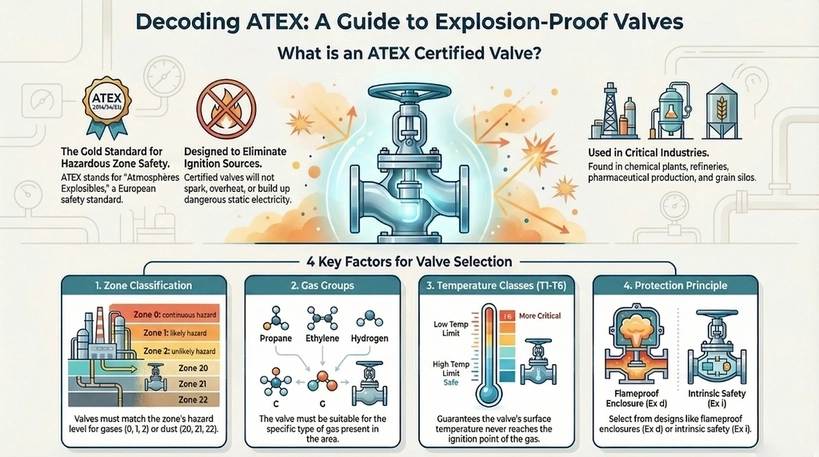
Selecting the appropriate explosion proof valve is essential for safety in industries that pose explosion risks. ATEX certified valves guarantee compliance with European standards, preventing ignition sources from heat, sparks, or static electricity. This blog explores key factors for choosing ATEX certified explosion proof valves that ensure overall operational safety, highlighting the entailed regulations and […]
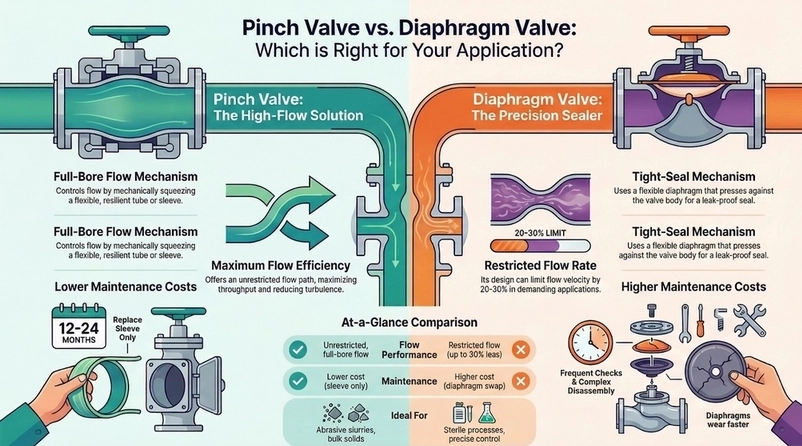
When handling abrasive or viscous media in industrial processes, the type of valve used can heavily affect the performance, efficiency, and overall user experience. In relation to this, two of the most common valve options are pinch and diaphragm valves. In this blog, we delve into the pinch valve vs diaphragm valve discussion, analyzing flow […]

