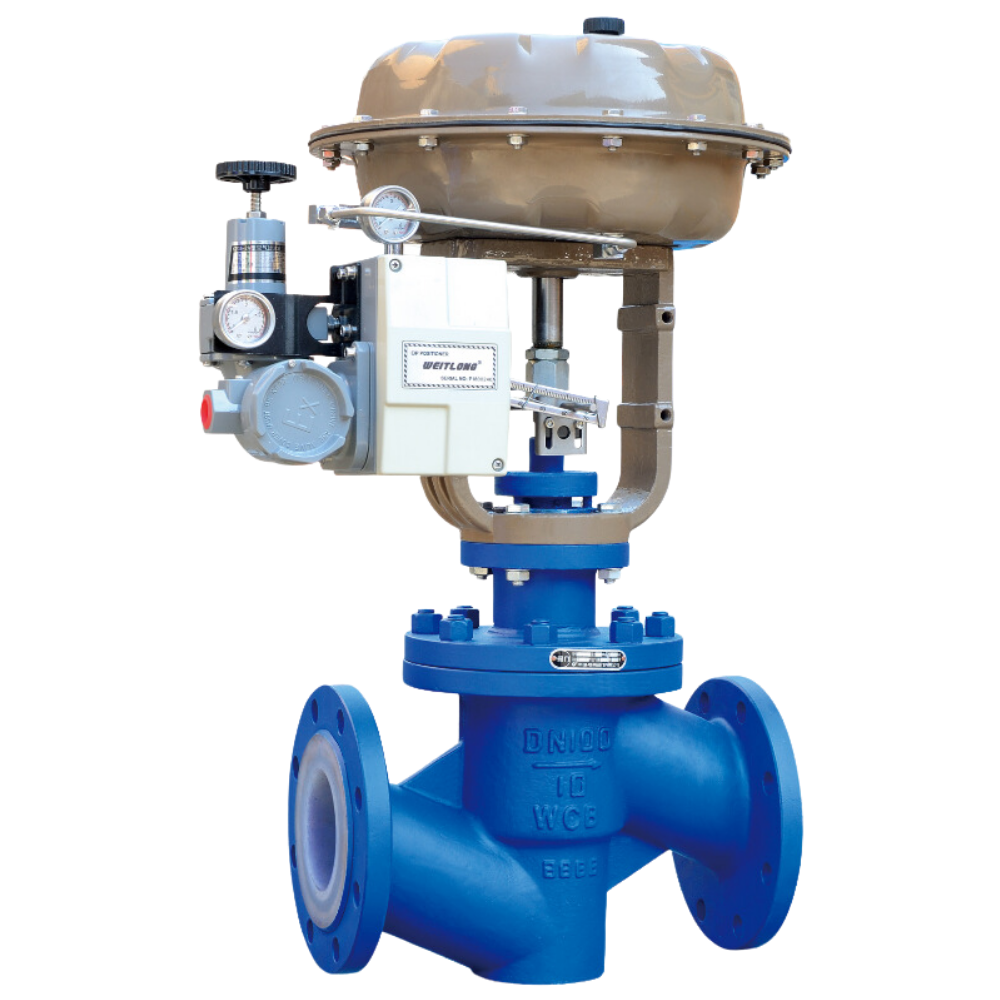
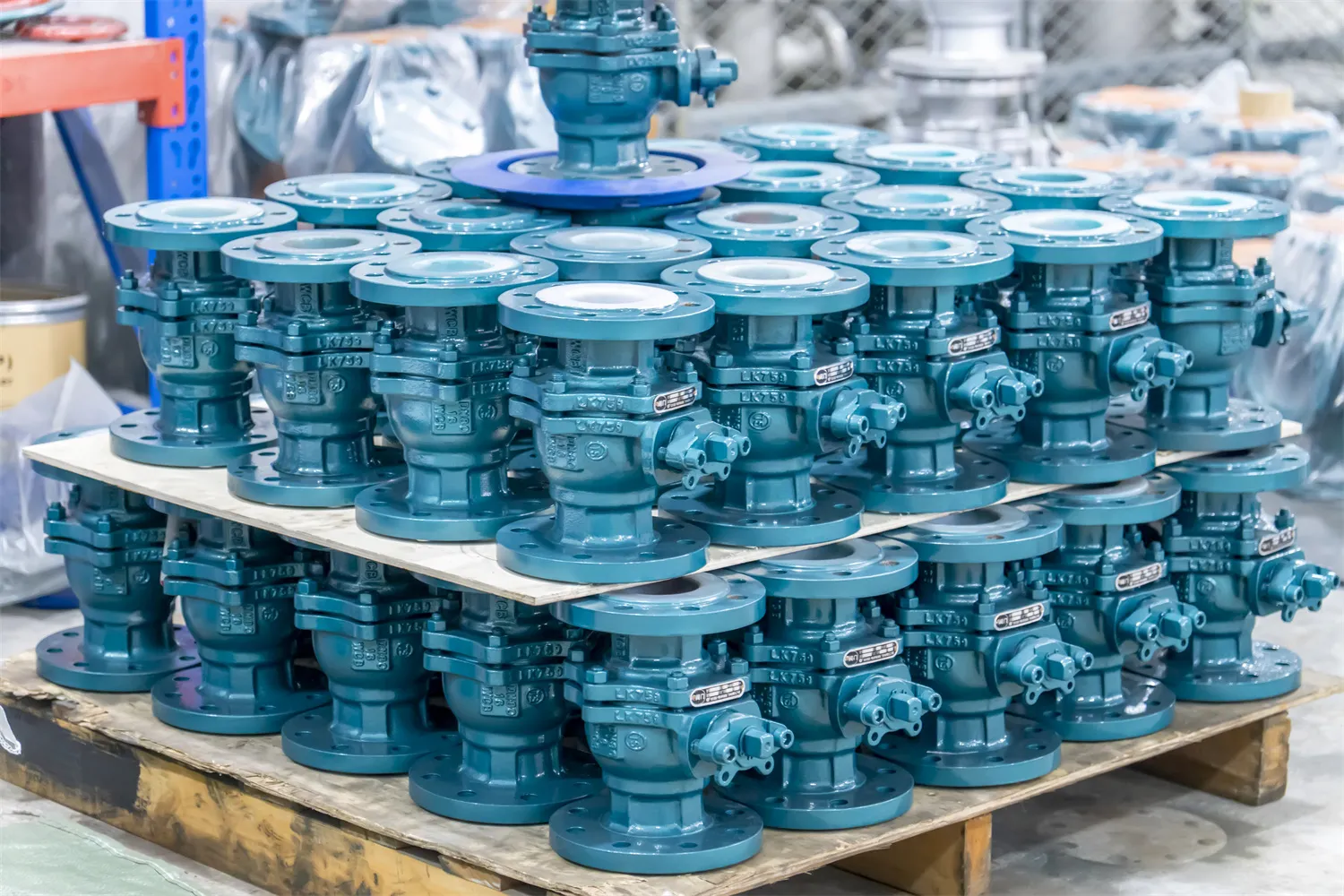
Actuated ball valves play a crucial role in industrial automation, enabling precise control of fluid and gas flow. The choice between pneumatic ball valves and electric ball valves directly impacts efficiency, safety, and long-term operational costs.
So, which one is best for your application? Pneumatic actuators are known for their high-speed operation and durability, while electric actuators offer precision control and ease of installation. This guide breaks down their key differences and helps you choose the best option for your system.

Actuators are devices that automate ball valves, allowing remote operation instead of manual control. Let’s break down the two main types:
How does a pneumatic actuated ball valve work? Pneumatic actuators use compressed air to generate motion, turning the valve 90 degrees to open or close fluid flow. Internal pistons rotate a central shaft linked to the valve stem. Double-acting actuators use air for both directions, while spring-return models rely on air to open and a spring to close. These actuators are standard in industrial applications due to their speed, durability, and ability to operate in extreme conditions.
How to control actuated ball valves electrically? Electric actuators convert electrical energy into mechanical motion using motors and gear systems. They provide precise valve control, enabling smooth opening and closing operations. These actuators are equipped with limit switches to prevent over-rotation, modulating control for flow adjustments, and manual override functions for emergencies. Available in multiple voltage options, they are suitable for various industrial applications, including HVAC systems, water treatment, and automated production lines, ensuring reliability and efficiency.
Below is a direct comparison of pneumatic and electric-actuated ball valves based on key performance factors:
| Feature | Pneumatic Actuators | Electric Actuators |
| Power Source | Compressed air (60–125 PSI) | Electricity (12V, 24V, 120V, 240V) |
| Speed | Fast (0.5–1 second per cycle) | Slower (6–25 seconds per cycle) |
| Durability | 1,000,000+ cycles | 250,000+ cycles |
| Precision | Less precise, better for on/off operations | Highly precise, good for modulating control |
| Safety (Fail-Safe Options) | Spring-return available | Requires backup power or failsafe battery |
| Environmental Suitability | Works in extreme temperatures (-20°F to 350°F) | Limited temperature range (40°F to 150°F) |
| Maintenance | Requires air system upkeep | Minimal maintenance |
| Cost | Lower upfront cost, higher operating costs | Higher upfront cost, lower operating costs |
Choosing between pneumatic and electric actuators depends on several key factors.
Calculate breakaway torque using manufacturer specifications by determining the force required to rotate the valve from a fully closed position. This ensures the actuator provides enough power for smooth operation. Pneumatic actuators generate high torque output, making them ideal for large valves in high-pressure applications such as chemical processing and oil & gas industries. Their fast response time also makes them suitable for high-cycle operations.
On the other hand, electric actuators deliver consistent and precise torque, making them ideal for applications requiring modulation control, such as HVAC systems and water treatment facilities. They ensure smooth operation with minimal energy consumption and reduced maintenance.
Pneumatic actuators function efficiently in harsh environments with extreme temperatures ranging from -20°F to 350°F, making them suitable for industries like oil and gas, mining, and chemical processing. Their resistance to moisture and contaminants ensures reliability in wet or dusty conditions.
Electric actuators require dry, controlled environments to prevent overheating or electrical malfunctions, typically within a limited temperature range of 40°F to 150°F. When explosion-proof certification (ATEX) is necessary, pneumatic actuators are the safer option due to their non-electrical nature, eliminating the risk of sparking in hazardous locations.
ASME & ISO Standards: Ensure actuator compatibility with global industry standards to guarantee safety, efficiency, and reliability in various applications. Compliance with these standards ensures actuators can be used across multiple industries without operational issues.
NEMA Ratings for Electric Actuators:
If you need high-speed operation, durability, and fail-safe options, pneumatic ball valves are the best choice. If you prioritize precision, ease of use, and energy efficiency, use an electric ball valve. For high-quality actuated ball valves, check out Lianke Valve for reliable solutions tailored to your industrial needs.
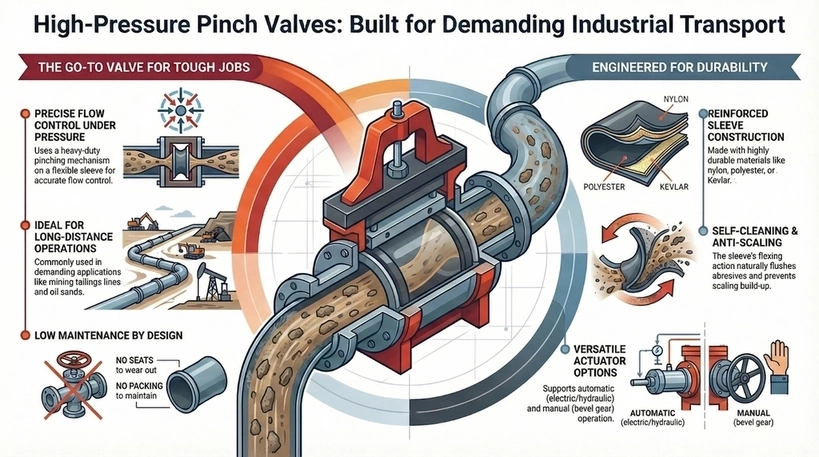
High pressure pinch valves, like PN16 pinch valve and class 150 pinch valve designs, involve a rugged and heavy-duty pinching mechanism in positioning the sleeve, resulting in an almost accurate and measurable flow of media. This kind of valve is popular and commonly used for long distance operations in mining tailings lines or oil sands, […]
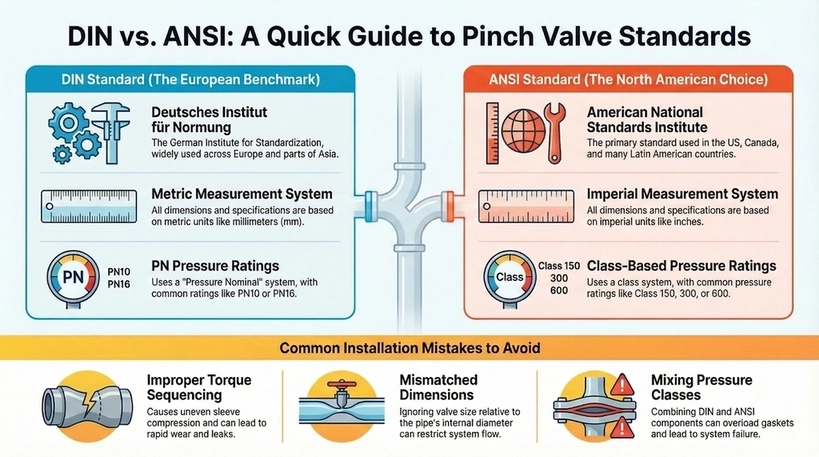
Understanding pinch valve dimensions and flanges ensures seamless integration into piping systems, particularly when choosing between DIN vs ANSI. The two are different but commonly used standards by organizations in engineering, manufacturing, and product design. DIN was developed in Germany but widely adopted across Europe and parts of Asia. Meanwhile, ANSI standards, which originate from […]
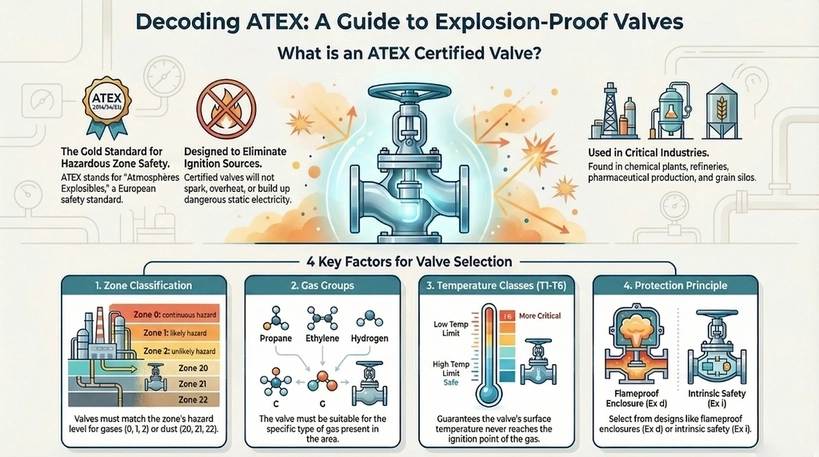
Selecting the appropriate explosion proof valve is essential for safety in industries that pose explosion risks. ATEX certified valves guarantee compliance with European standards, preventing ignition sources from heat, sparks, or static electricity. This blog explores key factors for choosing ATEX certified explosion proof valves that ensure overall operational safety, highlighting the entailed regulations and […]
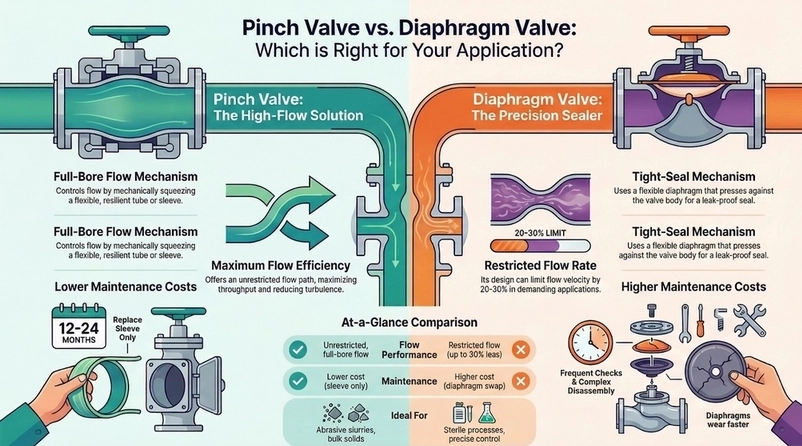
When handling abrasive or viscous media in industrial processes, the type of valve used can heavily affect the performance, efficiency, and overall user experience. In relation to this, two of the most common valve options are pinch and diaphragm valves. In this blog, we delve into the pinch valve vs diaphragm valve discussion, analyzing flow […]