
To install a Y strainer vertically, position it with the pocket pointing down in a downflow line and make sure there’s enough room for maintenance. When done right, vertical Y strainers filter effectively while gravity helps collect debris. Here’s how to do it properly.
Many people install Y strainers horizontally, but vertical mounting works great in certain situations. Strainer y designs work well in vertical pipes when installed correctly, especially when space is tight.
When choosing between vertical and horizontal placement, remember that horizontal installation works best for steam and gas applications. Vertical installation excels in liquid systems where gravity assists debris collection. Vertical mounting often requires less floor space too.
The question isn’t just can a wye be installed horizontally; both positions work well depending on your system requirements.
The orientation of your Y strainer depends on the media flowing through it. In steam or gas piping, it’s best if your strainer is horizontal. This helps stop water from collecting inside the pocket, which prevents erosion.
If the media passing through is liquid, it could be beneficial to fit your Y strainer vertically into the system, as long as the piping allows. Doing this prevents debris from being drawn back into the flow of the media.
| Media Type | Recommended Orientation | Reason |
| Steam | Horizontal | Prevents condensate buildup in pocket |
| Gas | Horizontal | Prevents liquid accumulation |
| Liquid | Vertical (downflow) | Uses gravity to collect debris |
| Slurries | Vertical (downflow) | Prevents solids from settling in horizontal runs |
Durable stainless steel filtration to protect valves & equipment from particulate damage.
View Product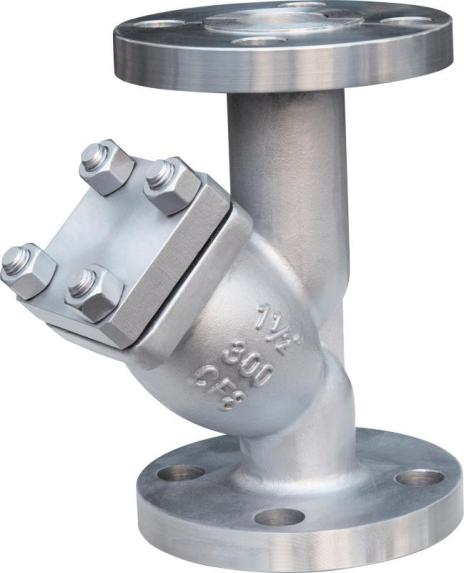
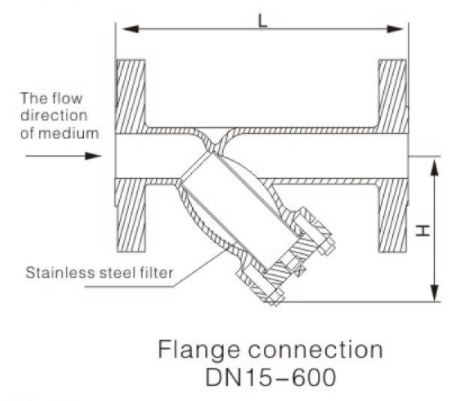
Before installing a basket strainer or Y strainer in your piping system, complete these preparatory steps to ensure success:
Check that your Y strainer’s pressure rating matches your system requirements. Make sure the strainer material works with your process fluid. Look at all seals for problems that might cause leaks, and check that your pipeline is properly aligned to prevent stress on connections. Finally, confirm you have enough clearance below the strainer for screen removal.
Good planning prevents installation issues that could compromise performance or create maintenance challenges later.
Follow these steps to install your Y strainer vertically:
Step 1: Install a blowdown valve at the blow-off connection for easy cleaning.
Step 2: For optimal monitoring, add pressure gauges at both inlet and outlet connections.
Step 3: Position the Y strainer upstream of any equipment requiring protection like pumps or valves.
Step 4: Support the pipeline properly near the inlet and outlet connections.
Step 5: Orient the wye strainers with the pocket pointing downward to collect debris properly.
Step 6: Align the flow arrow on the strainer with the downward direction of pipeline flow.
Step 7: Ensure gaskets are properly seated before tightening connections.
Step 8: Tighten connections according to manufacturer specifications.
The most important part is getting the orientation right. The strainer in piping needs to be positioned with the pocket pointing downward so gravity can help collect debris.
When installing Y strainers vertically, certain requirements are non-negotiable. The flow direction must be downward through the strainer. The strainer pocket must point downward to properly collect debris. You need adequate clearance below the strainer for screen removal and cleaning. Support brackets must accommodate the strainer’s weight and operational stresses.
If flow direction is upward in your vertical pipe, don’t use a Y strainer — debris would flow back into the pipe instead of collecting in the strainer pocket.
When choosing a Y strainer for vertical mounting, consider several important factors. The material must be compatible with your process fluid. Pressure and temperature ratings should match your system requirements. Select a screen mesh size that captures the contaminants of concern. Look for access features that make maintenance easier in a vertical orientation.
Our selection of Y strainers includes models engineered specifically for vertical installations across various applications, with options ranging from standard commercial grades to specialized designs.
To keep your vertical Y strainer working well, check it regularly based on how dirty your system gets. Use pressure differential readings to determine when cleaning is needed. Ensure you have adequate clearance for screen removal during maintenance. Consider installing a blowdown valve for easier cleaning if you don’t already have one.
Different media require specific considerations when installing a Y strainer vertically. Liquid applications work well with vertical installation and downward flow, as gravity assists debris collection. Steam applications typically prefer horizontal installation to prevent condensate buildup. Gas applications usually recommend horizontal orientation, but vertical can work with proper drainage.
If you’re not sure what’s best for your specific situation, consult with a filtration specialist who can recommend the optimal orientation based on your process conditions.
By following these guidelines, your vertical Y strainer will protect your equipment effectively and be easy to maintain throughout its service life.
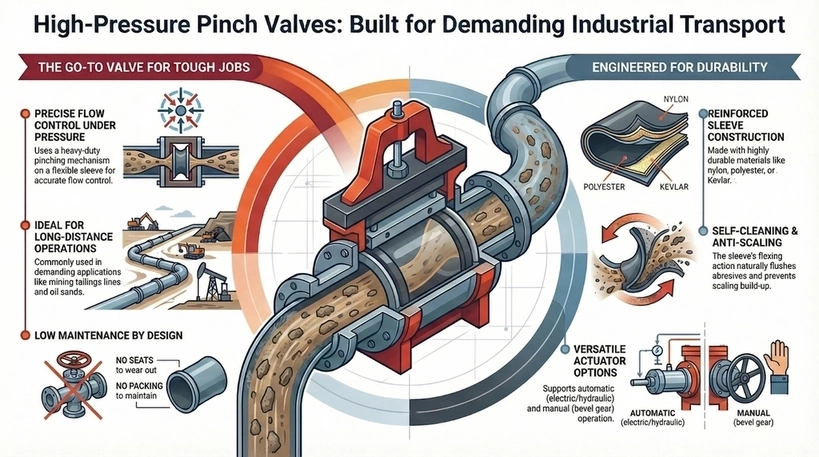
High pressure pinch valves, like PN16 pinch valve and class 150 pinch valve designs, involve a rugged and heavy-duty pinching mechanism in positioning the sleeve, resulting in an almost accurate and measurable flow of media. This kind of valve is popular and commonly used for long distance operations in mining tailings lines or oil sands, […]
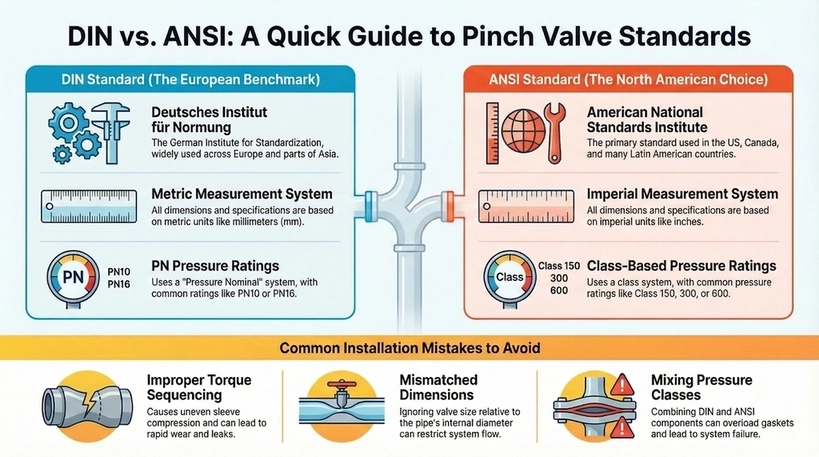
Understanding pinch valve dimensions and flanges ensures seamless integration into piping systems, particularly when choosing between DIN vs ANSI. The two are different but commonly used standards by organizations in engineering, manufacturing, and product design. DIN was developed in Germany but widely adopted across Europe and parts of Asia. Meanwhile, ANSI standards, which originate from […]
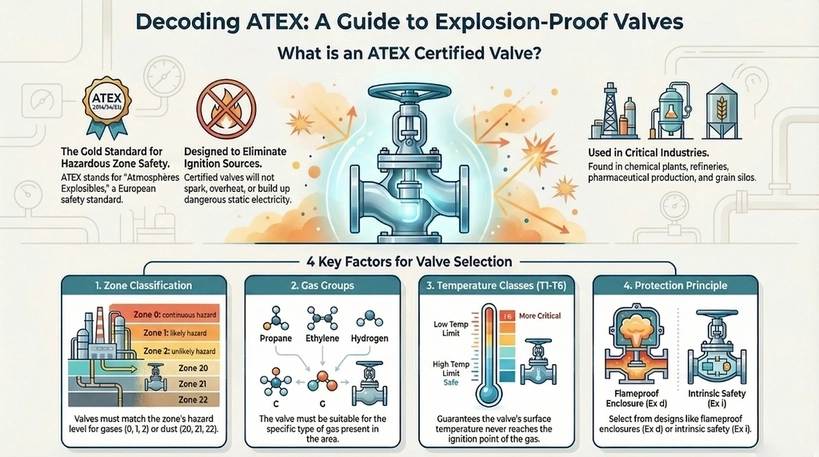
Selecting the appropriate explosion proof valve is essential for safety in industries that pose explosion risks. ATEX certified valves guarantee compliance with European standards, preventing ignition sources from heat, sparks, or static electricity. This blog explores key factors for choosing ATEX certified explosion proof valves that ensure overall operational safety, highlighting the entailed regulations and […]
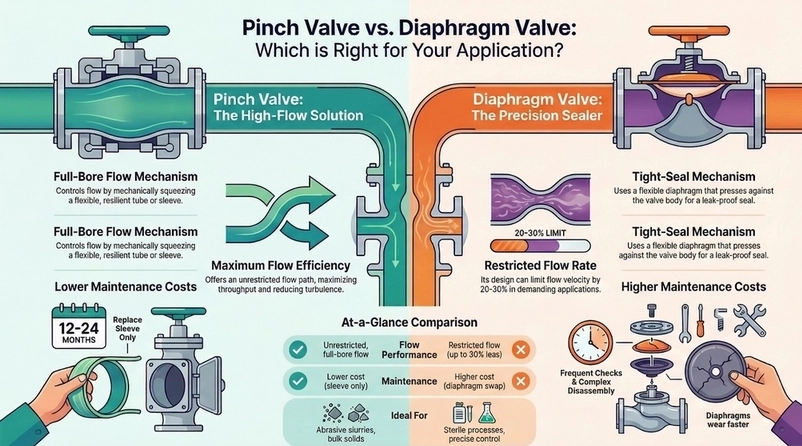
When handling abrasive or viscous media in industrial processes, the type of valve used can heavily affect the performance, efficiency, and overall user experience. In relation to this, two of the most common valve options are pinch and diaphragm valves. In this blog, we delve into the pinch valve vs diaphragm valve discussion, analyzing flow […]

