When you’re specifying an industrial steel strainer, the material you choose determines how long the equipment lasts, how well it handles pressure, and how much downtime you’re going to face.
It is more about survival in the field, not just cost.
So, what’s the best material for an industrial strainer? Let’s break it down based on actual performance, not guesswork.
Not all steel strainers are built the same. Each material—carbon steel, stainless, and duplex—offers different strengths, weaknesses, and use cases. Here’s how they stack up in real-world applications.
Strong and affordable—that’s carbon steel’s appeal. It handles high pressure and temperature well, making it common in oil, petrochemical, and heavy industrial systems.
Great for cost-conscious setups where corrosion isn’t a dealbreaker. Just keep it dry and well-maintained to avoid rust.
Looking for rust resistance and clean performance?
Stainless, with its chromium content, forms a self-healing, corrosion-resistant surface—perfect for aggressive or hygienic environments like food, pharma, and water treatment
Want more strength and corrosion resistance without the cost of exotic alloys?
Duplex stainless steels offer both—thanks to their mixed austenitic/ferritic structure, they resist chloride stress corrosion and deliver greater strength than standard stainless. They’re often used where both toughness and durability are critical.
For extreme corrosion scenarios—like acid exposure or marine brine—advanced alloys (e.g., Zeron 100) deliver top-tier performance, though at a higher cost. Use these only when cheaper steels won’t last.
Reliable filtration to protect valves and pipelines — Y, T, basket, and duplex types available.
Explore Strainers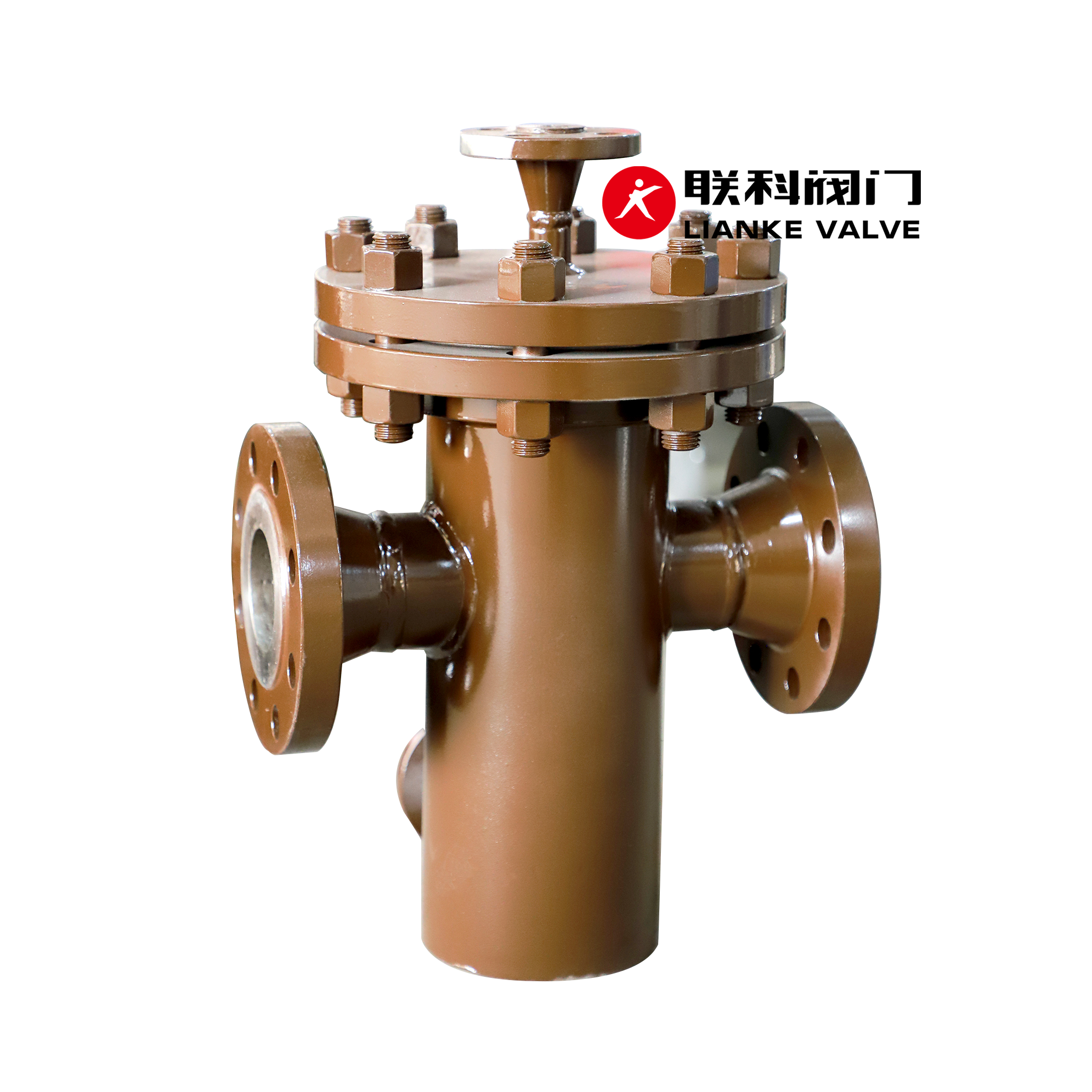
Here’s a side-by-side look at how each material compares:
| Material | Pros | Cons |
| Carbon Steel | Budget-friendly, strong under pressure/heat | Rust-prone, needs coatings/support |
| Stainless Steel (304/316) | Corrosion-resistant, clean, widely available | More expensive; some grades less tough |
| Duplex Stainless Steel | Stronger, more durable, resistant to chloride attacks | Higher cost and limited availability |
| Specialty Alloys (e.g. Zeron 100) | Extreme corrosion resistance and strength | Premium price—only for harshest cases |
The type of basket strainer you use—whether standard or duplex—makes material selection just as important, especially for the housing and internal mesh.
Carbon steel bodies with stainless baskets are common combos; they let the cheap part do the structure work while giving corrosion resistance at the filtration point. Duplex bodies and baskets are ideal for corrosive or salt-rich fluids.
Basket strainers are great for high‑flow, heavy‑debris setups—best used horizontally. Duplex versions allow you to clean one basket while the other remains in service, so no downtime.
Ask yourself:
Base your choice on your actual conditions—don’t overbuild for no reason.
Carbon steel works for benign systems; stainless is your go-to for corrosion; duplex is the no-nonsense performer for chloride-rich or tough environments; go specialty only when absolutely essential.
When someone asks, “What is the best material for an industrial strainer?” the answer is: it depends on your fluid, conditions, and maintenance needs.
Pick steel strainer materials that fit your process—not the other way around.
Need help narrowing it down? Lianke offers a full range of steel strainers in carbon steel, stainless, and duplex options—built to match your exact application.Let’s find the right fit together. Get in touch with us today. Let’s talk.
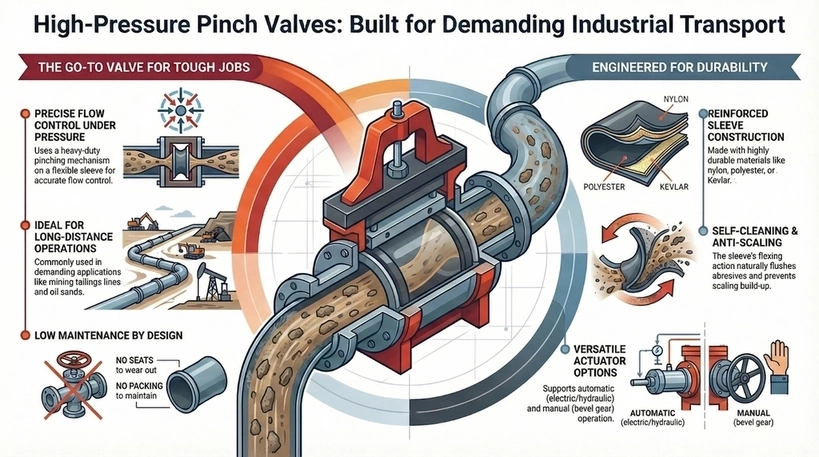
High pressure pinch valves, like PN16 pinch valve and class 150 pinch valve designs, involve a rugged and heavy-duty pinching mechanism in positioning the sleeve, resulting in an almost accurate and measurable flow of media. This kind of valve is popular and commonly used for long distance operations in mining tailings lines or oil sands, […]
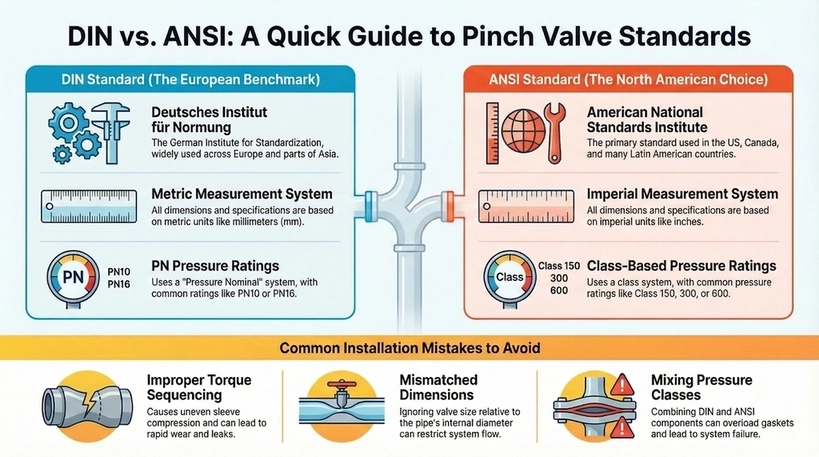
Understanding pinch valve dimensions and flanges ensures seamless integration into piping systems, particularly when choosing between DIN vs ANSI. The two are different but commonly used standards by organizations in engineering, manufacturing, and product design. DIN was developed in Germany but widely adopted across Europe and parts of Asia. Meanwhile, ANSI standards, which originate from […]
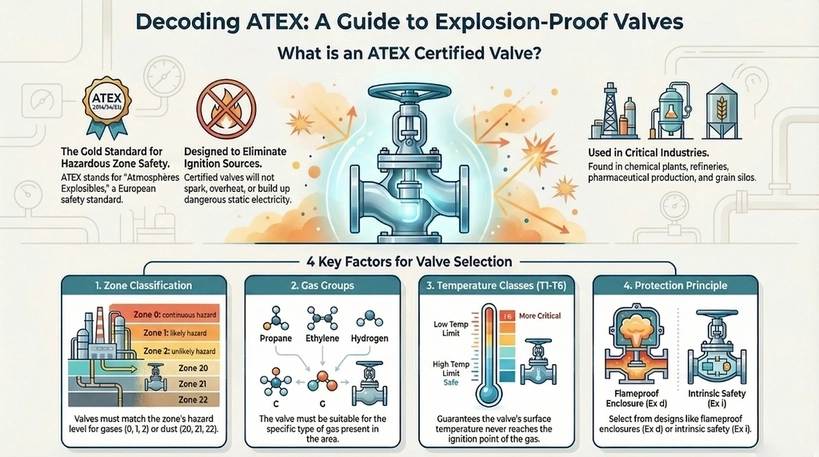
Selecting the appropriate explosion proof valve is essential for safety in industries that pose explosion risks. ATEX certified valves guarantee compliance with European standards, preventing ignition sources from heat, sparks, or static electricity. This blog explores key factors for choosing ATEX certified explosion proof valves that ensure overall operational safety, highlighting the entailed regulations and […]
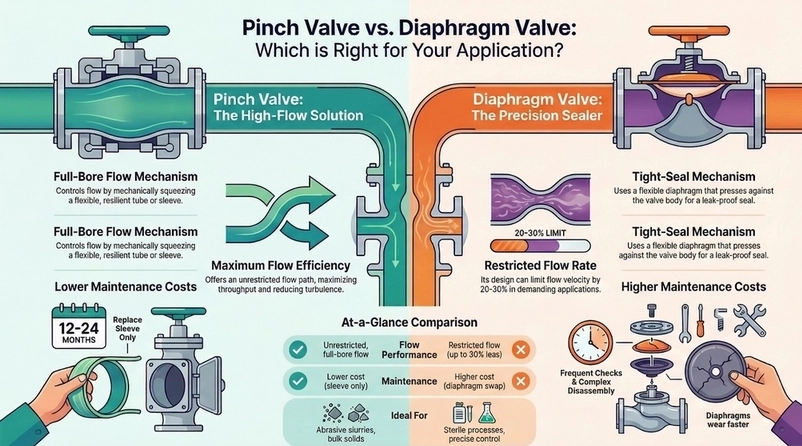
When handling abrasive or viscous media in industrial processes, the type of valve used can heavily affect the performance, efficiency, and overall user experience. In relation to this, two of the most common valve options are pinch and diaphragm valves. In this blog, we delve into the pinch valve vs diaphragm valve discussion, analyzing flow […]