When it comes to pinch valves, sleeve material is the heart of how well your valve performs. Choose the wrong one, and you could end up with leaks, wear, or downtime. But choose the right sleeve? It ensures smooth flow, lasts longer, and reduces maintenance worries.
So, how to select the sleeve for a pinch valve? Let’s break it down simply—starting with standard options and moving up to materials made for tougher jobs.
If your application involves things like water, air, or non-corrosive fluids, you don’t need anything fancy. These materials are often your best bet—they’re reliable, affordable, and get the job done without overengineering.
This is one of the most common sleeve materials for pinch valves—and for good reason. It’s cost-effective, flexible, and great for handling general-purpose tasks like water, light slurry, and air.
Natural rubber also has excellent elasticity and wear resistance, which makes it a strong fit for simple applications. Just avoid it where there are chemicals, oils, or aggressive media involved.
If you’re dealing with mild chemicals, low-pressure steam, or slightly elevated temperatures, EPDM is a solid step up. It’s also resistant to ozone and UV exposure, which makes it perfect for outdoor use.
Applications in water treatment, food processing (non-oily), and light chemical flow benefit from EPDM’s durability and chemical stability.
These sleeves work well in non-aggressive environments, where abrasion, high temperatures, or chemical resistance isn’t a big issue. They’re a great starting point if you’re managing utility systems, clean liquids, or air supply lines.
Durable Pinch Valve Sleeve
Engineered for high-abrasion applications, our pinch valve sleeve ensures maximum durability and operational efficiency. Ideal for industrial slurry control.
View More Details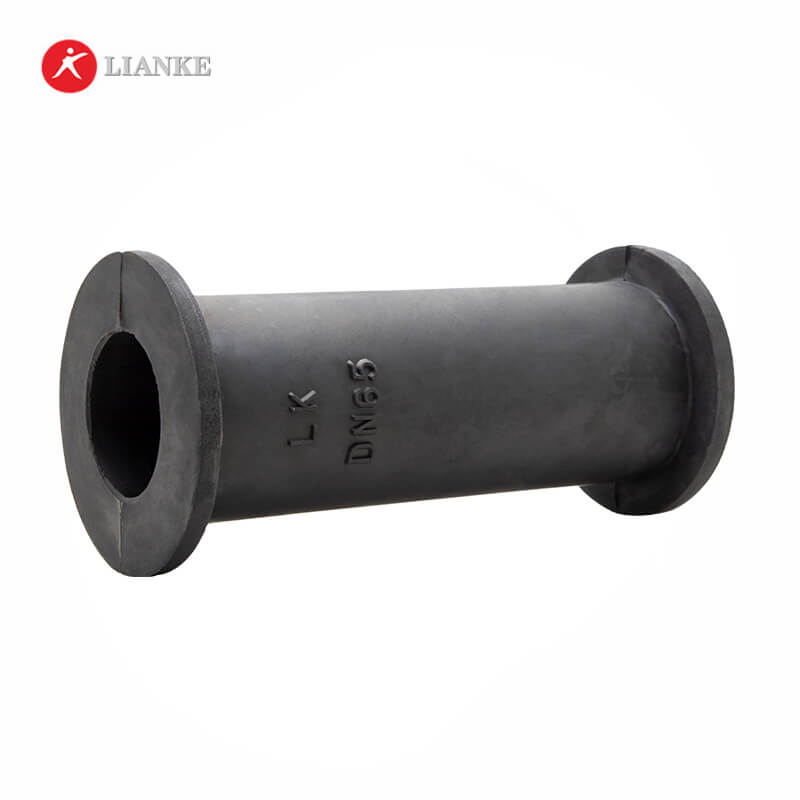
Now, if your process involves harsh chemicals, oils, abrasive media, or higher temperatures, standard sleeves won’t cut it. You’ll need materials built to perform under pressure—literally.
CSM sleeves are known for excellent UV, weathering, and chemical resistance. They’re a go-to for applications in outdoor environments or where corrosive chemicals are present. If you’re in chemical processing, wastewater treatment, or mining, this material can handle the challenge.
NBR is specifically built to withstand oils, fuels, greases, and hydrocarbons. If your system involves oily or greasy media—like in petrochemical or industrial plant processes—this is the sleeve to consider. It holds up where natural rubber would quickly degrade.
Butyl rubber sleeves offer excellent resistance to gases, acids, and chemicals. They’re great for chemical and gas-related applications where low permeability is key. Butyl is also strong in sealing performance, making it a reliable choice in pressure-heavy systems.
For extremely specific or harsh working conditions, custom sleeves like Nad hose blends are engineered to meet specialized needs—like very high temperatures, abrasive slurries, or complex chemical mixes. These are often designed in consultation with your valve supplier or OEM.
Here’s the golden rule: match the material to your media. The right sleeve ensures better valve performance, fewer breakdowns, and lower maintenance costs.
Here are the key questions to ask:
Also, think about maintenance and how often you want to replace sleeves. Sometimes a higher-cost material pays off long-term.
Working with a trusted manufacturer helps too. At Lianke, we guide our customers through this selection process, offering a wide range of sleeve materials to fit both standard and demanding applications.
The sleeve material you choose directly impacts how well your pinch valve performs. From natural rubber for simple jobs to nitrile or CSM for demanding ones, there’s a sleeve built for your exact need.Not sure which one fits your setup? Reach out and let’s find the best match for your application. The right sleeve means fewer problems, a longer life, and better control.
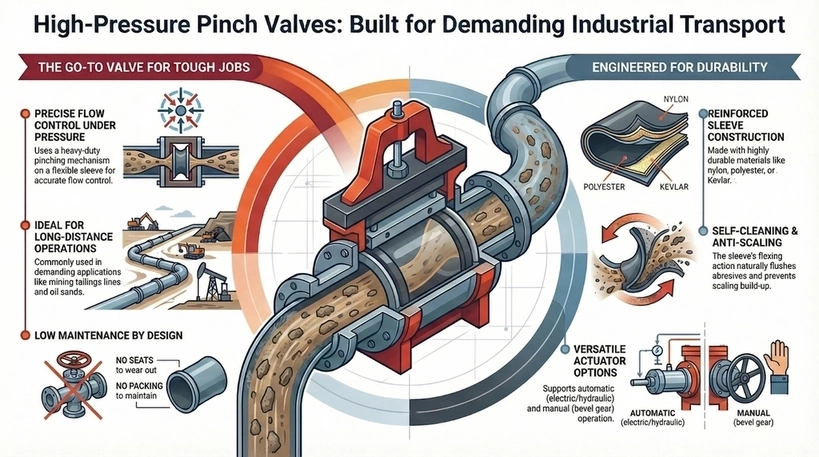
High pressure pinch valves, like PN16 pinch valve and class 150 pinch valve designs, involve a rugged and heavy-duty pinching mechanism in positioning the sleeve, resulting in an almost accurate and measurable flow of media. This kind of valve is popular and commonly used for long distance operations in mining tailings lines or oil sands, […]
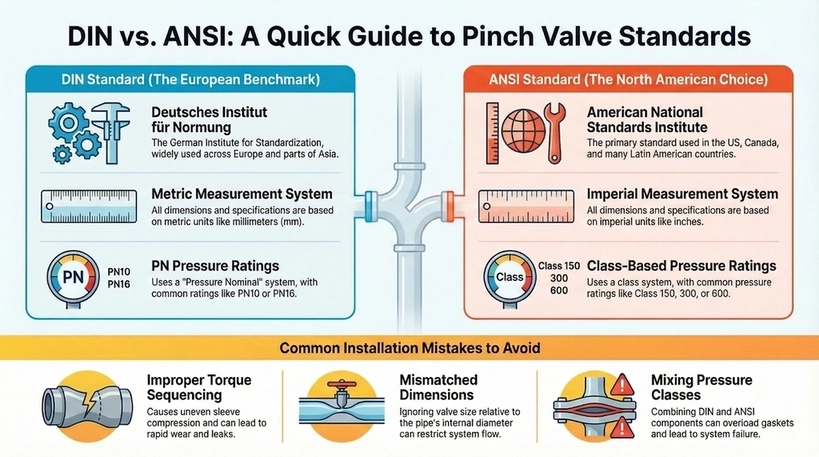
Understanding pinch valve dimensions and flanges ensures seamless integration into piping systems, particularly when choosing between DIN vs ANSI. The two are different but commonly used standards by organizations in engineering, manufacturing, and product design. DIN was developed in Germany but widely adopted across Europe and parts of Asia. Meanwhile, ANSI standards, which originate from […]
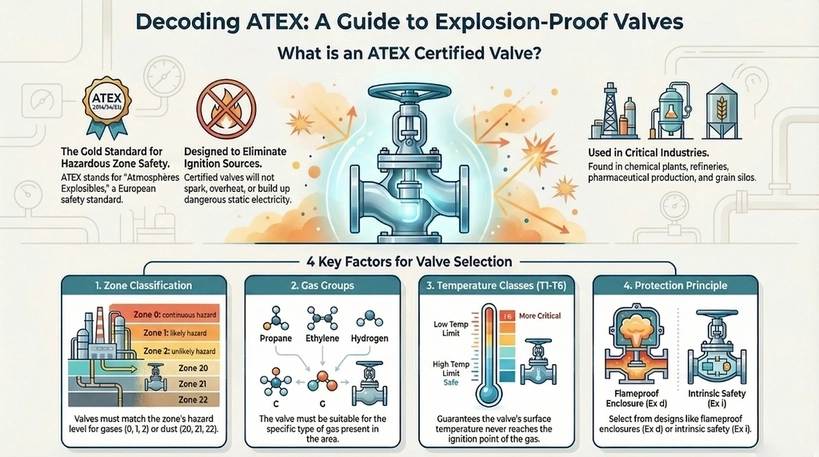
Selecting the appropriate explosion proof valve is essential for safety in industries that pose explosion risks. ATEX certified valves guarantee compliance with European standards, preventing ignition sources from heat, sparks, or static electricity. This blog explores key factors for choosing ATEX certified explosion proof valves that ensure overall operational safety, highlighting the entailed regulations and […]
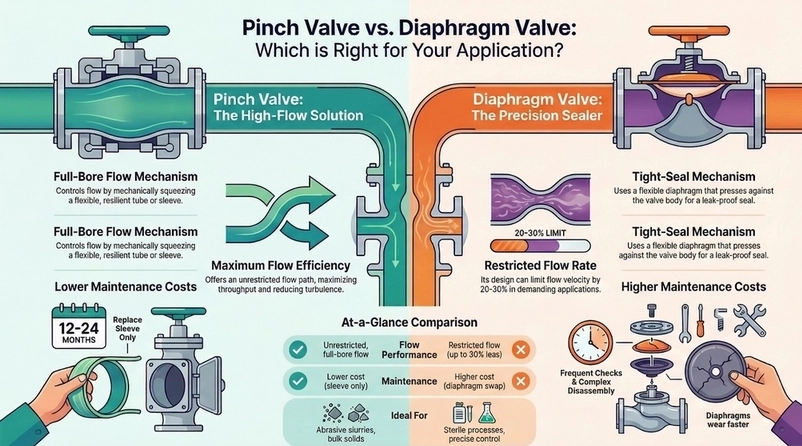
When handling abrasive or viscous media in industrial processes, the type of valve used can heavily affect the performance, efficiency, and overall user experience. In relation to this, two of the most common valve options are pinch and diaphragm valves. In this blog, we delve into the pinch valve vs diaphragm valve discussion, analyzing flow […]