When handling abrasive or viscous media in industrial processes, the type of valve used can heavily affect the performance, efficiency, and overall user experience. In relation to this, two of the most common valve options are pinch and diaphragm valves.
In this blog, we delve into the pinch valve vs diaphragm valve discussion, analyzing flow efficiency and long-term maintenance costs to support an industrial valve selection guide for various industrial applications.
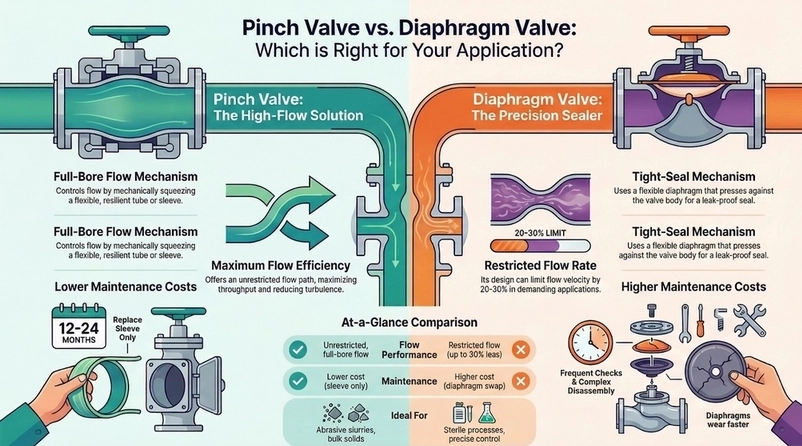
Pinch valves function by squeezing or pinching a flexible tube or sleeve to control the flow of fluid or substances. When it is open, the tube remains uncompressed, allowing the materials to flow through. By closing the valve through pinching off the tube, the flow will eventually stop.
These valves are commonly ideal in conditions where abrasive or corrosive materials are present. The flexible tube offers stable resilience against damage and wear, making it popular and suitable for such harsh applications.
Diaphragm valves use a flexible diaphragm to control fluid or material flow, acting as a barrier between the flow path and the valve body. When open, the valve lifts the diaphragm away from the flow path to allow the substance to pass through. When closed, the valve helps the diaphragm to seal against the valve body, effectively stopping the flow.
These kinds of valves are commonly ideal for conditions that require precise control, as they offer a tight and reliable seal, minimizing the risk of contamination. A “fail-safe” option is also available, making them suitable for applications prone to misuse or improper shutdowns.
Pinch valves offer unrestricted full-bore flow by compressing an elastomeric sleeve, reducing turbulence, and maximizing throughput as true high-flow rate valves. In contrast, diaphragm valves have some flow restriction because of their weir or straight-through designs, limiting velocity by up to 20-30% in demanding applications. This then makes pinch valves more suitable for slurries requiring quick evacuation without losing pressure.
In valve maintenance cost comparison, pinch valves stand out with sleeve-only replacements, costing less than diaphragm valves, which need body disassembly and diaphragm swaps. Pinch sleeves last 12-24 months or more in abrasiveness through quarter inspections, while diaphragms wear faster, demanding frequent checks and higher labor.
In the pinch valve vs diaphragm valve discussion, the former one excels against bulk solids or corrosive slurries via different actuators, while the latter one suits sterile processes—commonly in food, chemical, and pharmaceutical industries—while needing force-controlled throttling. Both pinch and diaphragm valves have unique benefits, but pinch surpasses diaphragms in flow rates and maintenance cost while avoiding diaphragm valve flow restriction.
In LIANKE, we offer both pinch valves that keep operations reliable with minimal downtime and rubber-lined diaphragm valves that control flow using a flexible rubber diaphragm and corrosion-resistant body, delivering tight shutoff and easy maintenance. Both were subjected to rigorous testing and checking in actual working conditions, ensuring the valves can control fluid flow and enhance the overall safety and quality.
Discover our strict quality control and state-of-the-art facilities ensuring the highest standard for every valve.
Explore Process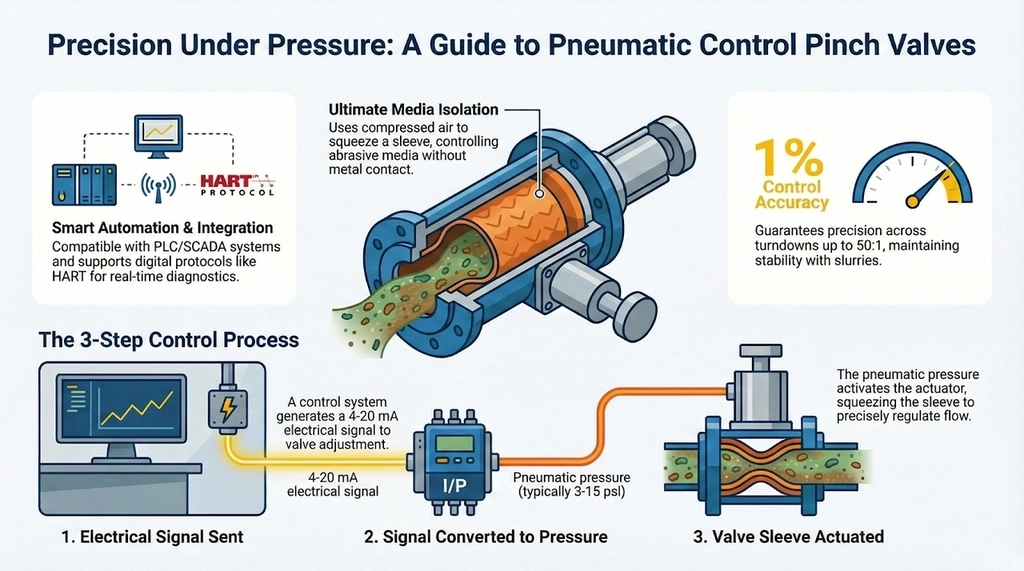
Industrial automation systems require valves that deliver precise flow control without compromising reliability in corrosive or abrasive media. A pneumatic control pinch valve excels as a modulating control valve, enabling precise flow to control pressure, temperature, or fluid levels. Using compressed air to gradually adjust the valve position allows smooth process control in mining, wastewater, […]
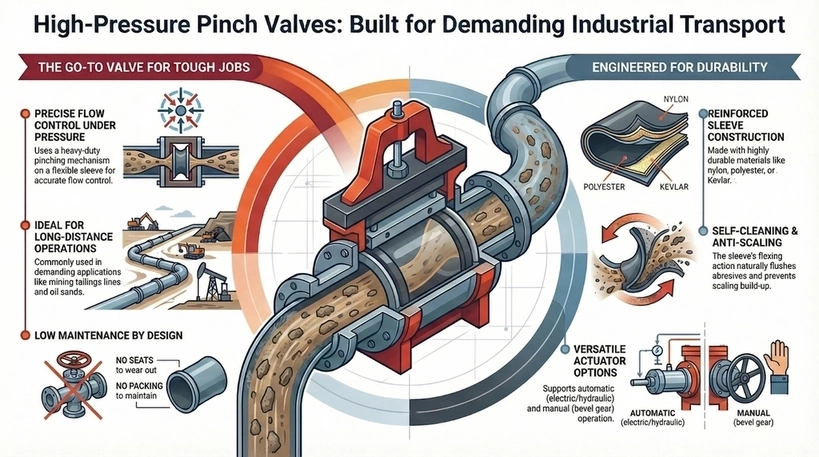
High pressure pinch valves, like PN16 pinch valve and class 150 pinch valve designs, involve a rugged and heavy-duty pinching mechanism in positioning the sleeve, resulting in an almost accurate and measurable flow of media. This kind of valve is popular and commonly used for long distance operations in mining tailings lines or oil sands, […]
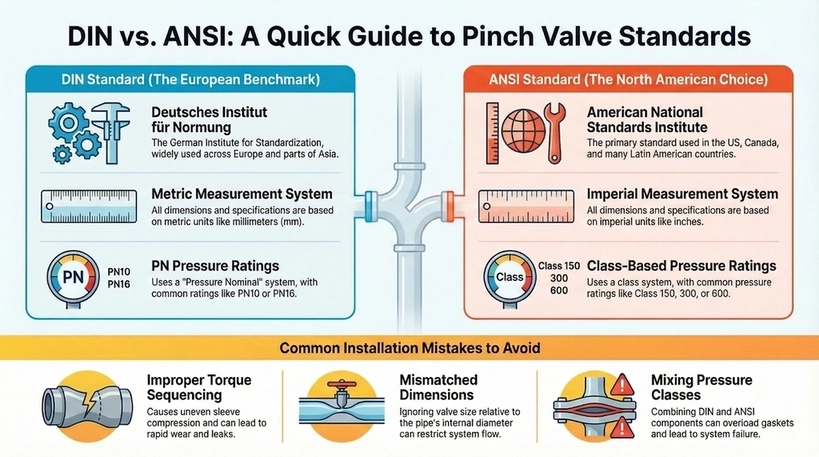
Understanding pinch valve dimensions and flanges ensures seamless integration into piping systems, particularly when choosing between DIN vs ANSI. The two are different but commonly used standards by organizations in engineering, manufacturing, and product design. DIN was developed in Germany but widely adopted across Europe and parts of Asia. Meanwhile, ANSI standards, which originate from […]
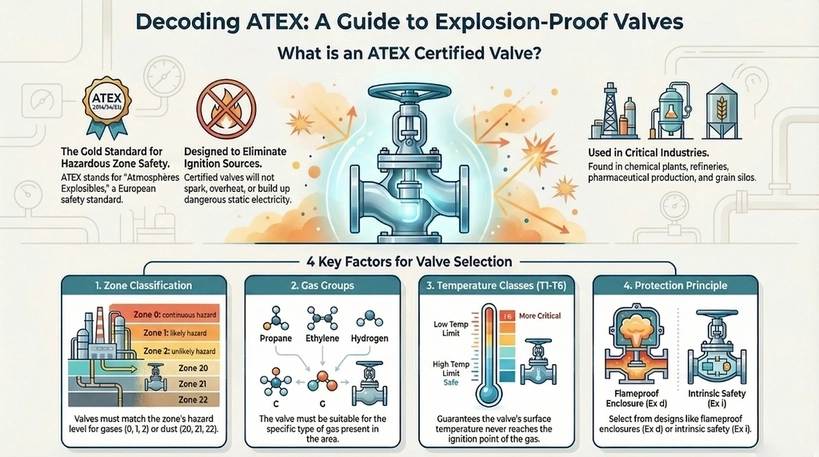
Selecting the appropriate explosion proof valve is essential for safety in industries that pose explosion risks. ATEX certified valves guarantee compliance with European standards, preventing ignition sources from heat, sparks, or static electricity. This blog explores key factors for choosing ATEX certified explosion proof valves that ensure overall operational safety, highlighting the entailed regulations and […]