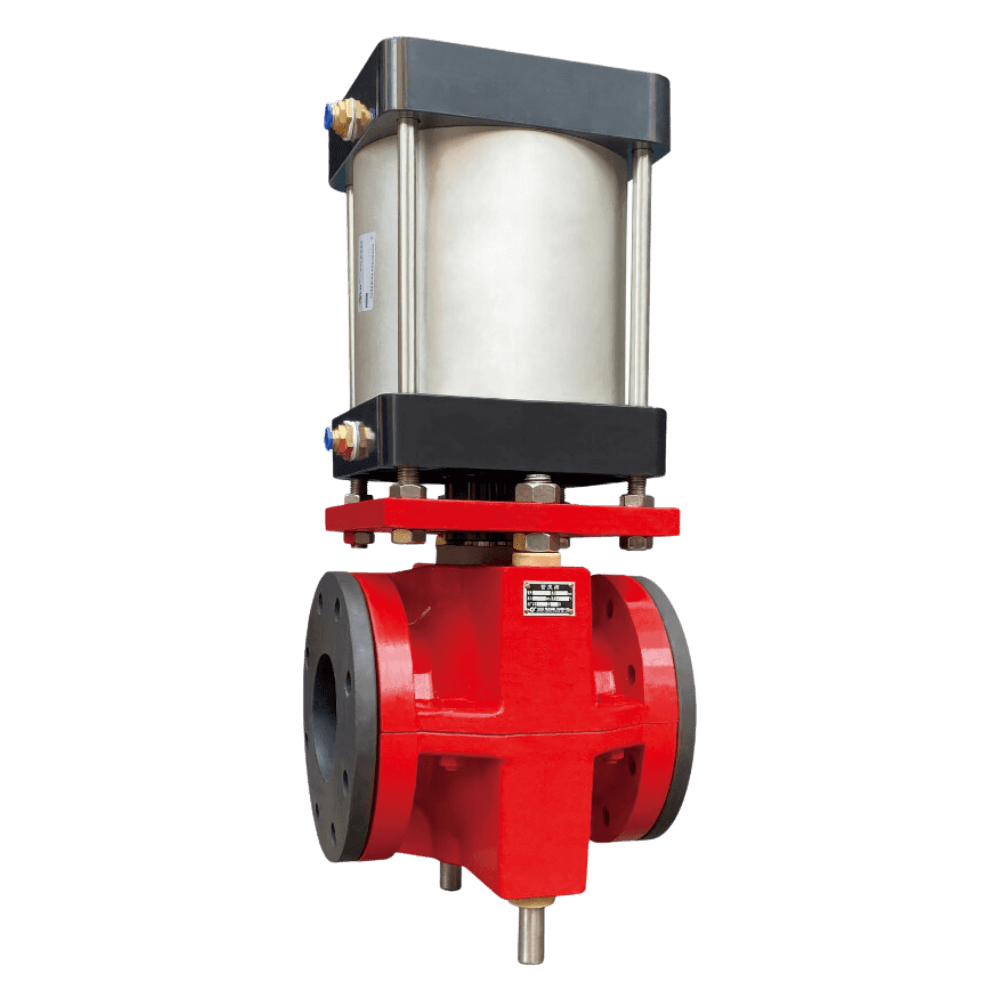
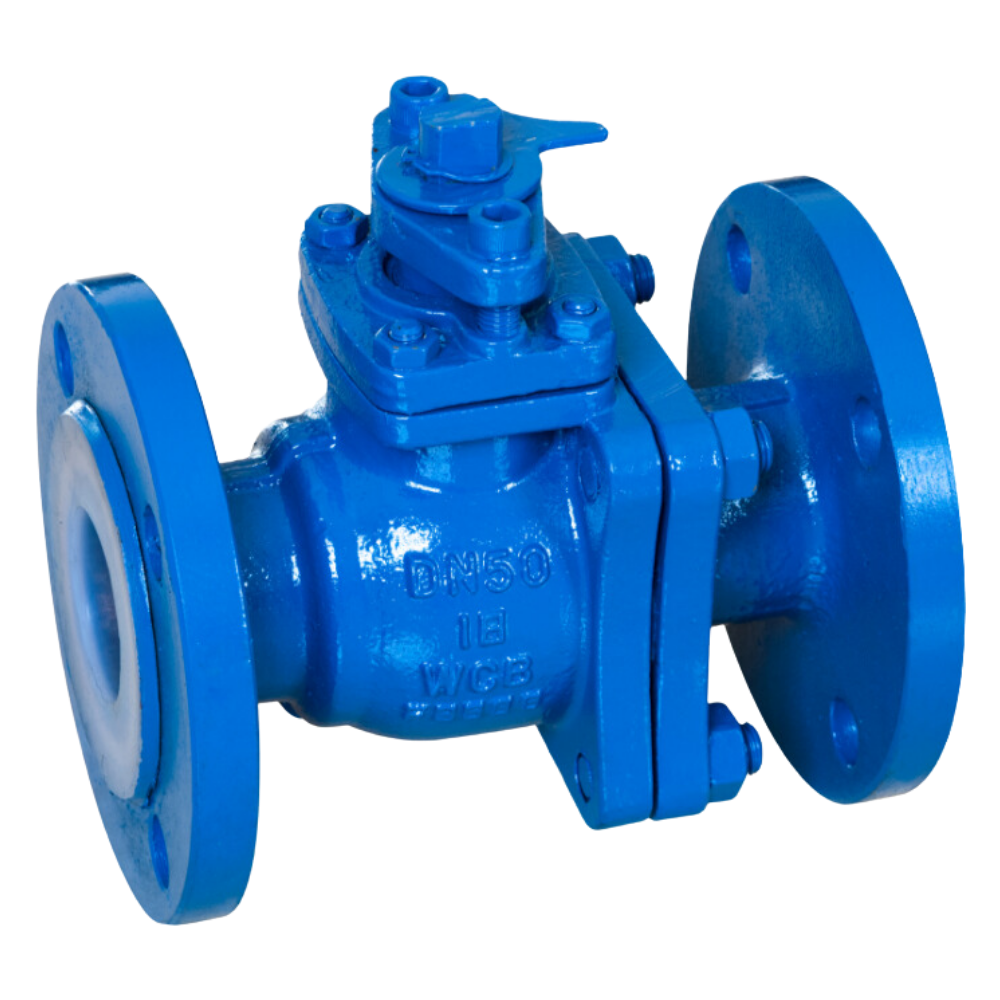
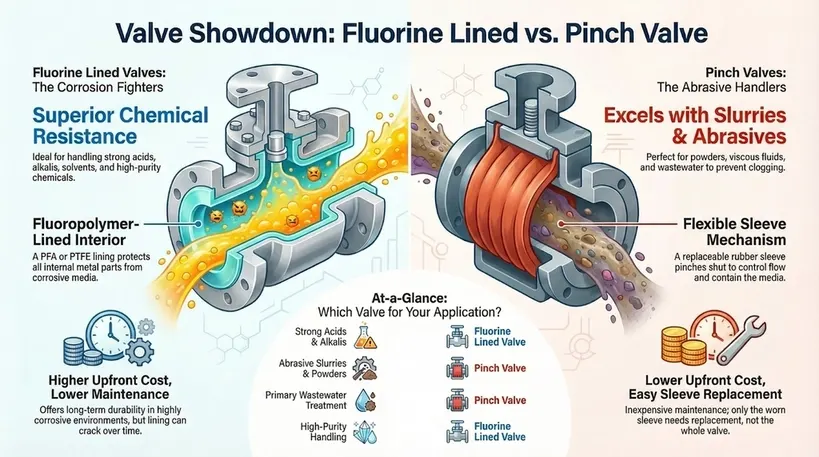
Mining is a highly demanding industry. It requires reliable and extremely durable valves to control the movement of sludges, suspensions, and bulk materials, which can be very abrasive. A heavy-duty пережимной клапан is a type of slurry valve that is best for mining tailings because of its flexible sleeve design, proven reliability, and clear flow passage.
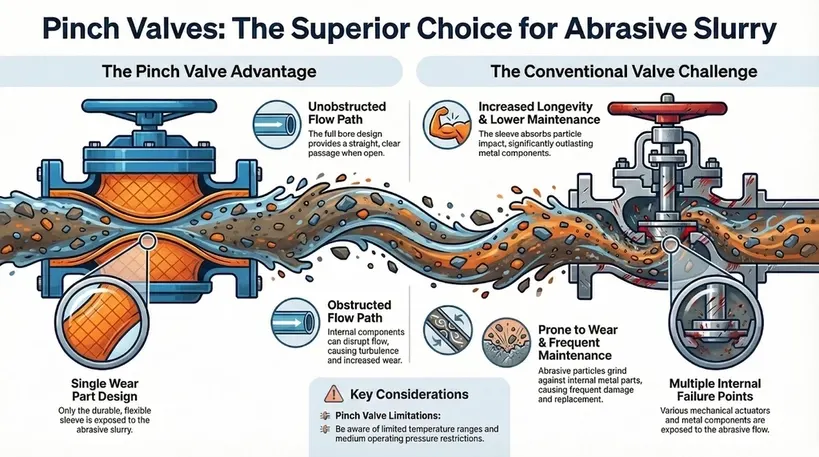
In this blog, we will delve into why pinch valves are the most ideal for mining tailings, highlighting their durability and versatility. We will also look at how pinch valves help boost productivity and reduce downtime, making them an essential tool for efficient slurry management in many industrial applications.
A pinch valve is a unique type of valve made to regulate the flow of liquids. The sleeve is “pinched” from the outside, through manual, пневматический пережимной клапан actuators, or electric mechanisms, to limit or stop the flow of material through the valve. It is characterised by its full-bore design that restricts any fluid or slurry from coming into contact with any part of the valve body except the sleeve, minimizing contamination and deterioration.
The following are the main components of a pinch valve:
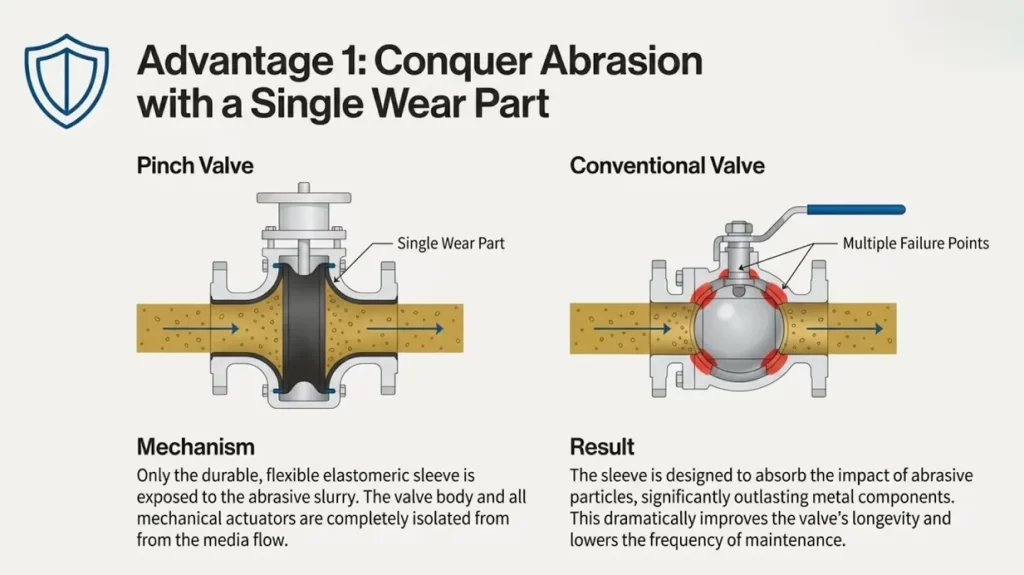
Pinch valves are usually chosen by mining valve suppliers because of their durable features and ease of installation and maintenance.
These kinds of valves are commonly installed wherever media needs to be regulated or shut off in pipelines, including mined raw materials like ores, coals, and minerals, as well as the removal of waste material that is taken out during the mining process. Additionally, pinch valves are utilized for the removal of mine water (also called as shaft or sump water in brown coal mining) that is extremely abrasive in common scenarios.
Generally, pinch valves are efficient tailings management valves designed for abrasive slurry handling through a specialized, non-mechanical pinching action. When opened, the sleeve expands and provides a straight and clear passage for slurries, and when pressure is applied, it then gently collapses inward and squeezes the slurry to restrict flow until it stops. This reduces particle grinding and wear, which improves longevity and lowers the frequency of maintenance.
1. What is the function of a pinch valve?
The function of a pinch valve is to restrict the flow of any media from any internal valve parts except the sleeve, reducing contamination.
2. What is the best valve for a lime slurry?
The best valve for a lime slurry should have a solid material cover, like an advanced ceramic ball valve or a specifically lined valve that helps protect the valve against the lime’s abrasive nature.
3. What are the disadvantages of pinch valves?
The disadvantages of pinch valves include a limited temperature range, restricted medium operating pressure, and concerns for face-to-face length when there’s a limited space for valve fitting.
Heavily duty pinch valves offer a reliable, cost-effective, and low-maintenance solution for controlling slurry flow in demanding industrial settings, like mining sectors. By learning the importance of pinch valves and their operating system can help you make better choices that improve equipment longevity and guarantee safety.
In LIANKE, we take pride in our industrial pinch valves that are designed to resolve clogging, abrasion, and corrosion concerns, ensuring smooth operations with minimal downtime. With over 20,000 pinch valve variants that cater to more than 1,500 customers worldwide, we provide the ideal pinch valve for abrasive slurry that constantly adheres to the global standards.
Discover our strict quality control and state-of-the-art facilities ensuring the highest standard for every valve.
Explore Process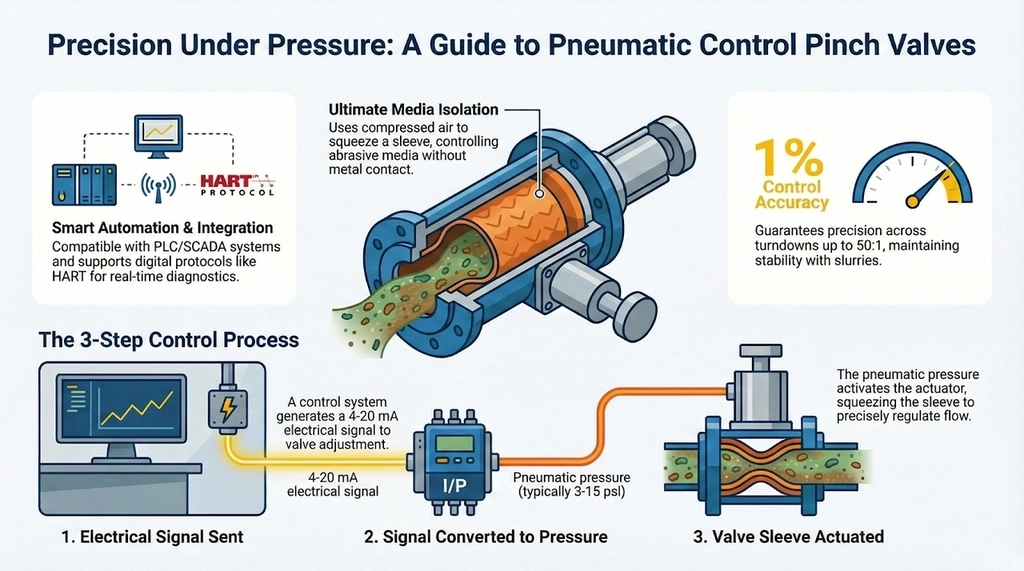
Industrial automation systems require valves that deliver precise flow control without compromising reliability in corrosive or abrasive media. A pneumatic control pinch valve excels as a modulating control valve, enabling precise flow to control pressure, temperature, or fluid levels. Using compressed air to gradually adjust the valve position allows smooth process control in mining, wastewater, […]
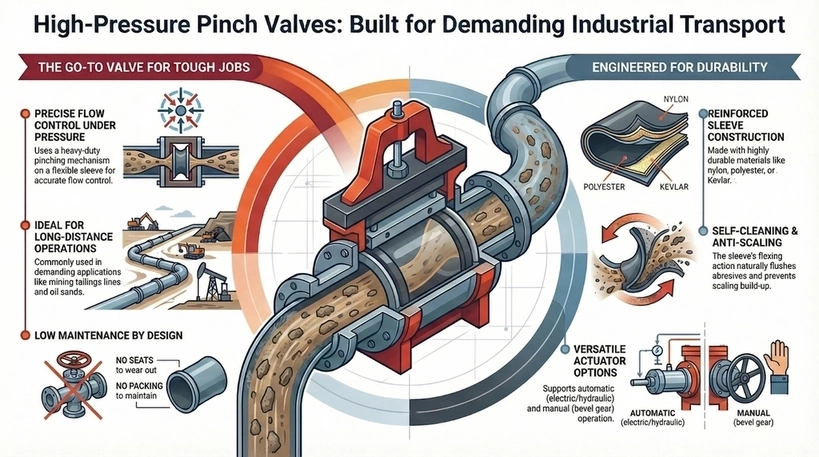
High pressure pinch valves, like PN16 pinch valve and class 150 pinch valve designs, involve a rugged and heavy-duty pinching mechanism in positioning the sleeve, resulting in an almost accurate and measurable flow of media. This kind of valve is popular and commonly used for long distance operations in mining tailings lines or oil sands, […]
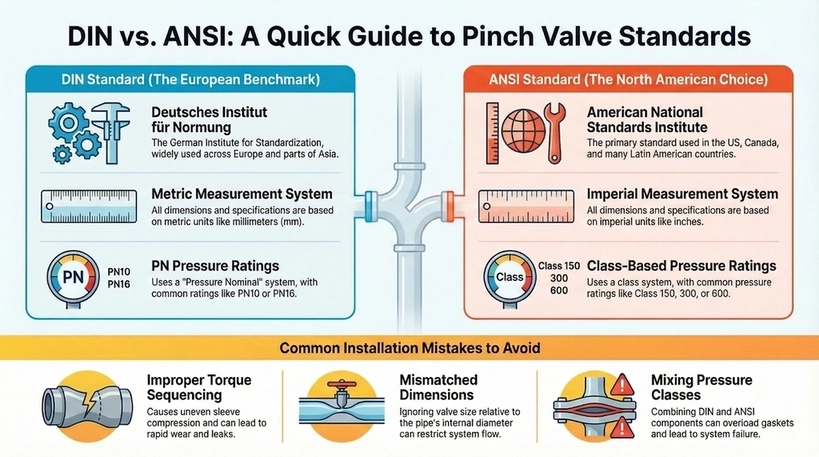
Understanding pinch valve dimensions and flanges ensures seamless integration into piping systems, particularly when choosing between DIN vs ANSI. The two are different but commonly used standards by organizations in engineering, manufacturing, and product design. DIN was developed in Germany but widely adopted across Europe and parts of Asia. Meanwhile, ANSI standards, which originate from […]
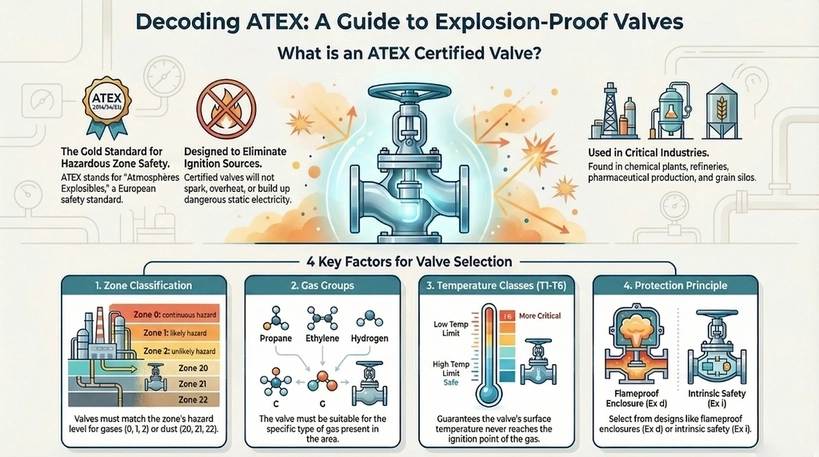
Selecting the appropriate explosion proof valve is essential for safety in industries that pose explosion risks. ATEX certified valves guarantee compliance with European standards, preventing ignition sources from heat, sparks, or static electricity. This blog explores key factors for choosing ATEX certified explosion proof valves that ensure overall operational safety, highlighting the entailed regulations and […]