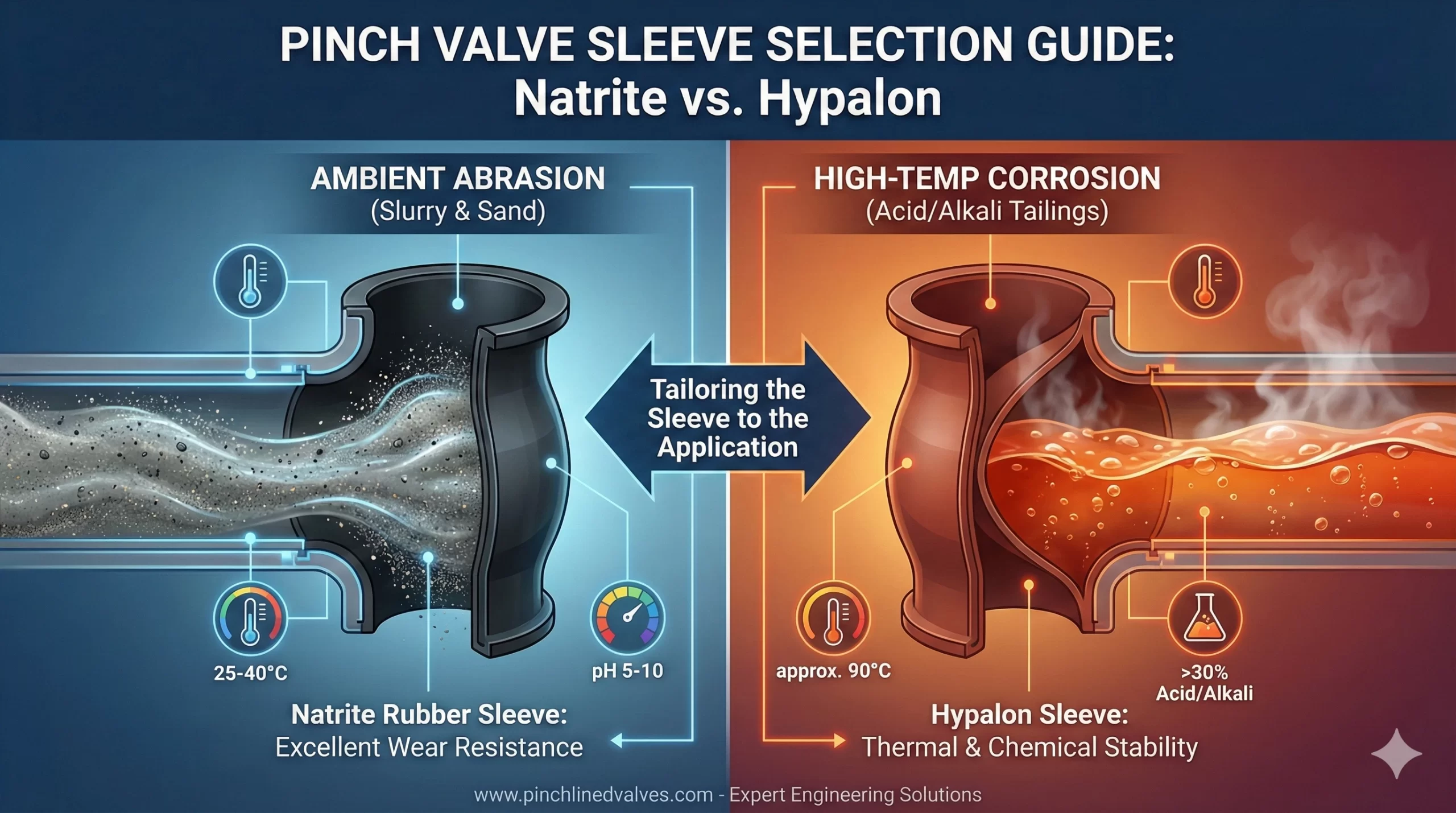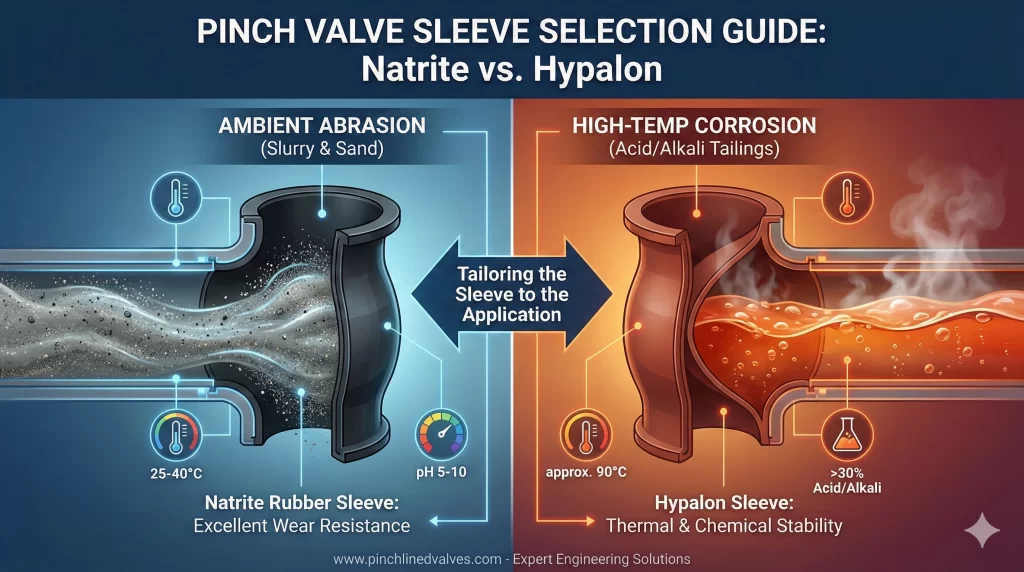
Answer1:(ambient temperature, fine sand, low concentration corrosion, high wear resistance): Preferred recommendation: Natrite Rubber sleeve. Reason: The core advantage of Natrite Rubber lies in its excellent wet abrasion resistance, particularly suitable for applications with severe wear such as fine sand and powdery materials. Its temperature resistance range (-30°C to +80°C) and corrosion resistance rating (10% acid, 30% alkali) fully meet the requirements of this condition. Selecting Natrite Rubber for this condition achieves the longest service life at a more economical cost.
Answer2: (high temperature, high concentration corrosion): Must select: Hypalon sleeve. Reason:The core challenges of this condition are high temperature (90°C) and high concentration corrosion. The maximum temperature resistance of Hypalon sleeve reaches 130°C, with acid/alkali resistance up to 50%, fully covering and providing margin for the performance requirements, making it the only reliable choice to ensure long-term stable valve operation under these harsh conditions.
For these two significantly different conditions, do you recommend using the same sleeve material or different materials? According to your technical data, which is more suitable between Natrite Rubberand Hypalon?
Summary: Do not standardize the sleeve material. “Natrite for ambient temperature wear resistance, Hypalon for high temperature corrosion resistance”is our core selection principle.
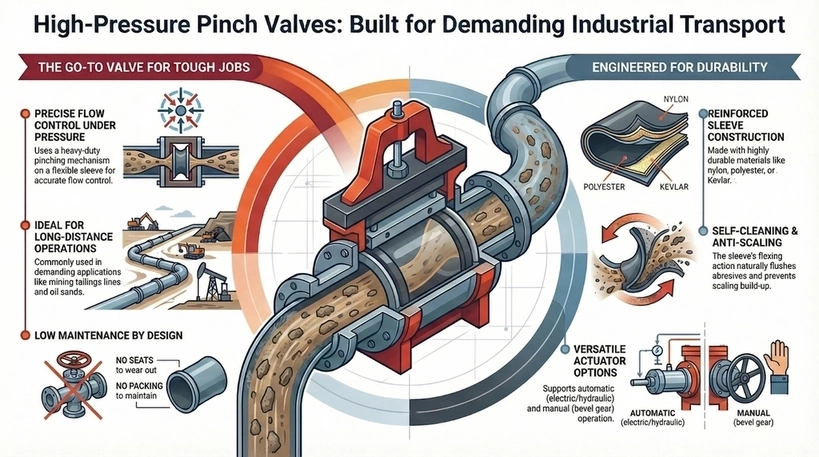
High pressure pinch valves, like PN16 pinch valve and class 150 pinch valve designs, involve a rugged and heavy-duty pinching mechanism in positioning the sleeve, resulting in an almost accurate and measurable flow of media. This kind of valve is popular and commonly used for long distance operations in mining tailings lines or oil sands, […]
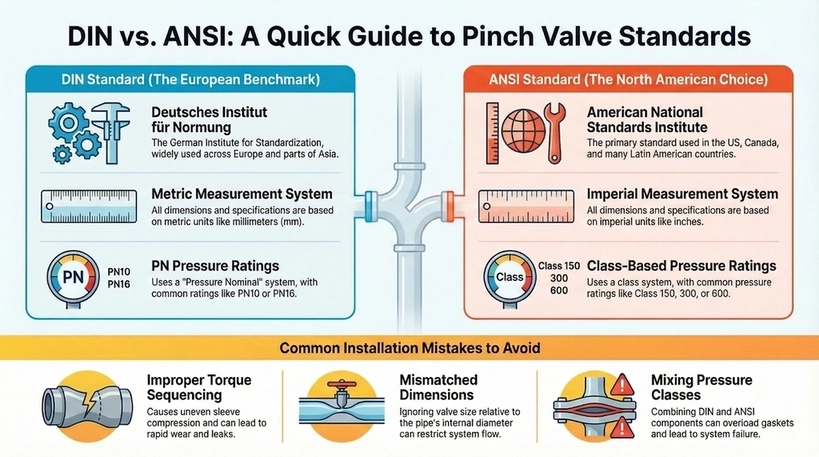
Understanding pinch valve dimensions and flanges ensures seamless integration into piping systems, particularly when choosing between DIN vs ANSI. The two are different but commonly used standards by organizations in engineering, manufacturing, and product design. DIN was developed in Germany but widely adopted across Europe and parts of Asia. Meanwhile, ANSI standards, which originate from […]
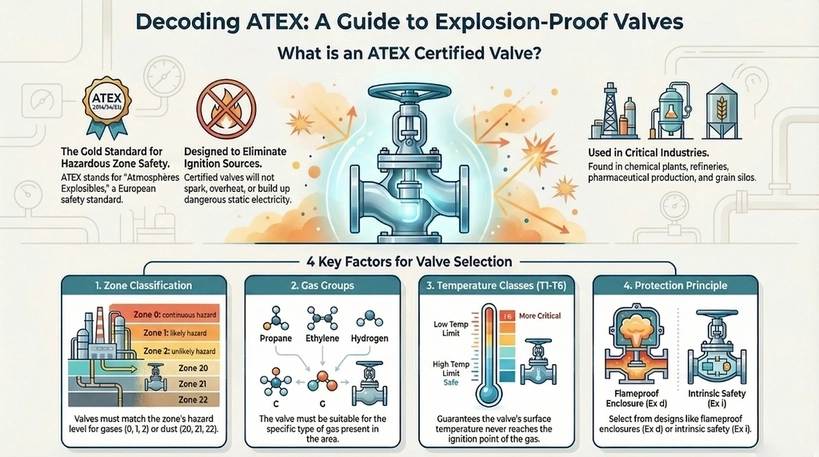
Selecting the appropriate explosion proof valve is essential for safety in industries that pose explosion risks. ATEX certified valves guarantee compliance with European standards, preventing ignition sources from heat, sparks, or static electricity. This blog explores key factors for choosing ATEX certified explosion proof valves that ensure overall operational safety, highlighting the entailed regulations and […]
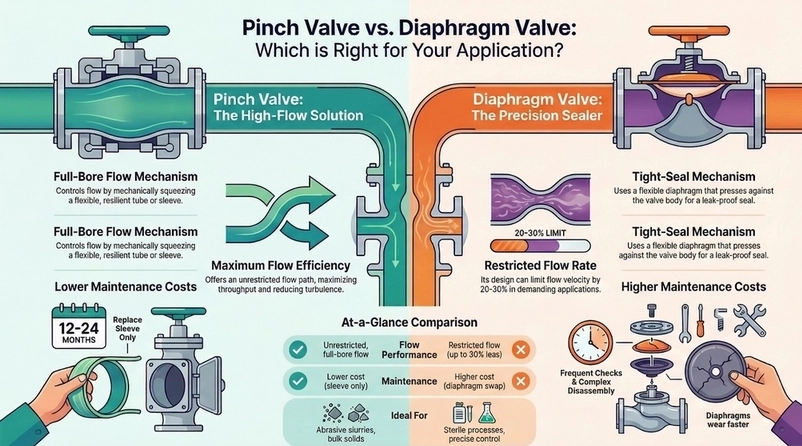
When handling abrasive or viscous media in industrial processes, the type of valve used can heavily affect the performance, efficiency, and overall user experience. In relation to this, two of the most common valve options are pinch and diaphragm valves. In this blog, we delve into the pinch valve vs diaphragm valve discussion, analyzing flow […]