
Industrial automation systems require valves that deliver precise flow control without compromising reliability in corrosive or abrasive media. A vanne à pincement à commande pneumatique excels as a modulating control valve, enabling precise flow to control pressure, temperature, or fluid levels. Using compressed air to gradually adjust the valve position allows smooth process control in mining, wastewater, or chemical dosing.
In this blog, we will provide an overview of pneumatic control pinch valves, highlighting their working performance and applications in industries featuring smart positioners, efficient compressed air actuation, and overall safety.
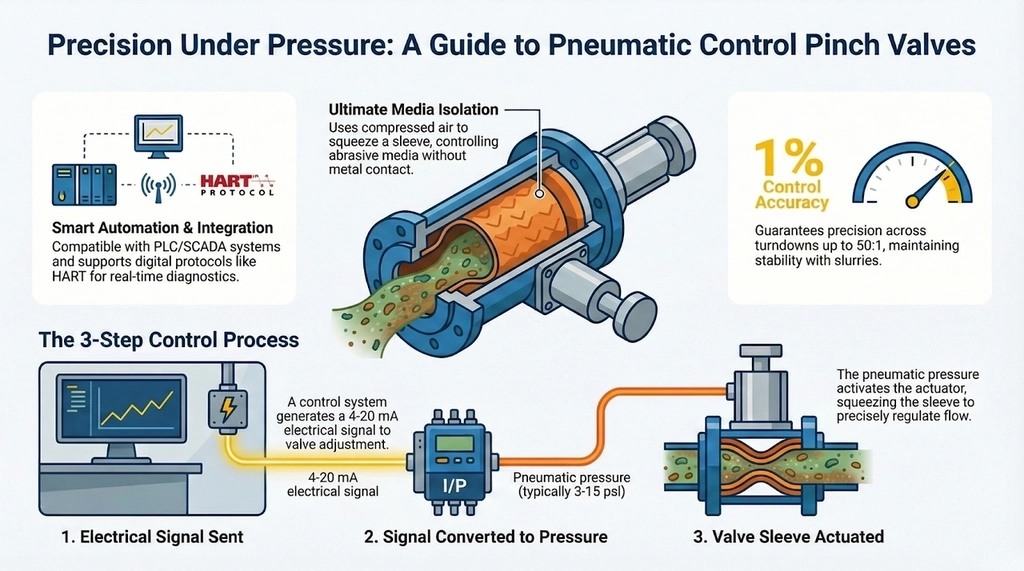
Pneumatic control pinch valves operate by converting an electrical control signal into precise valve movement to regulate flow. They use compressed air to proportionally squeeze the sleeve, reflecting the nature of the linear flow control valve from full open to droplet-tight shutoff and ensuring hygienic operation. Below is its step-by-step operational process:
Un automated pinch valve system with smart integration-controlled features incorporates feedback loops through position sensors, actively compensating for sleeve wear. These devices support digital protocols such as HART or Foundation Fieldbus for real-time diagnostics and precise control in modern industrial networks.
PLC compatibility allows seamless SCADA integration, where the 4-20mA valve positioner guarantees accuracy within 1% across turndowns up to 50:1. This surpasses other valves against slurries, maintaining stability and durability under varying pressures.
Accurate calculation of pneumatic control pinch valve sizing starts with flow rate (Cv or Kv), media velocity (under 10 m/s for abrasiveness), and pressure drop. The formula includes Cv = Q √(SG/ΔP), where Q is flow in GPM, SG for specific gravity, and ΔP for psi. Choose a sleeve durometer (50-90 Shore A) based on solids content, softer for throttling, and harder for isolation. Take note that oversizing causes fluttering, while undersizing may cause overloading.
In conclusion, the pneumatic control pinch valve stands out in precision modulation as a reliable modulating control valve, offering linear flow control through smart automation while proper sizing guarantees maximum effectiveness in industrial applications.
Dans LIANKE, we offer a range of pneumatic pinch valves with specialized sleeve options, delivering precise flow control through pressurized air actuation. EPDM sleeves tackle 75% of industrial chemical applications, while natural rubber variants conquer abrasive media. These ensure clog-resistant, leak-free operation with minimal maintenance needs, ideal for submerged welding, mining operations, and chemical processing.
Discover our strict quality control and state-of-the-art facilities ensuring the highest standard for every valve.
Explore Process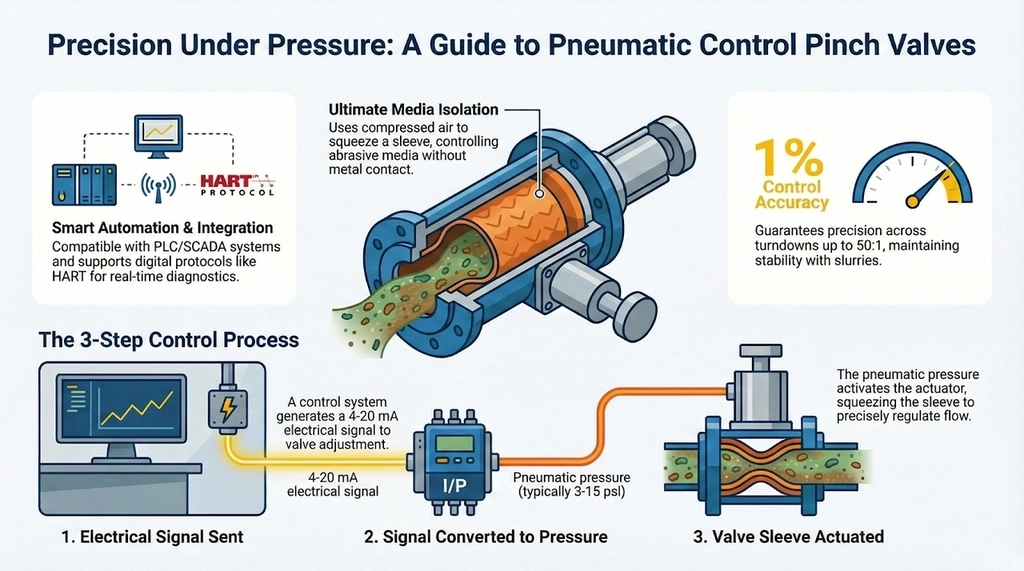
Industrial automation systems require valves that deliver precise flow control without compromising reliability in corrosive or abrasive media. A pneumatic control pinch valve excels as a modulating control valve, enabling precise flow to control pressure, temperature, or fluid levels. Using compressed air to gradually adjust the valve position allows smooth process control in mining, wastewater, […]
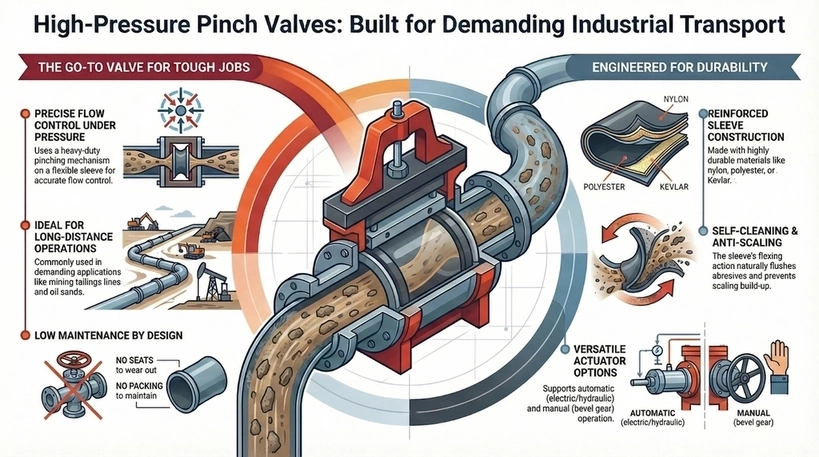
High pressure pinch valves, like PN16 pinch valve and class 150 pinch valve designs, involve a rugged and heavy-duty pinching mechanism in positioning the sleeve, resulting in an almost accurate and measurable flow of media. This kind of valve is popular and commonly used for long distance operations in mining tailings lines or oil sands, […]
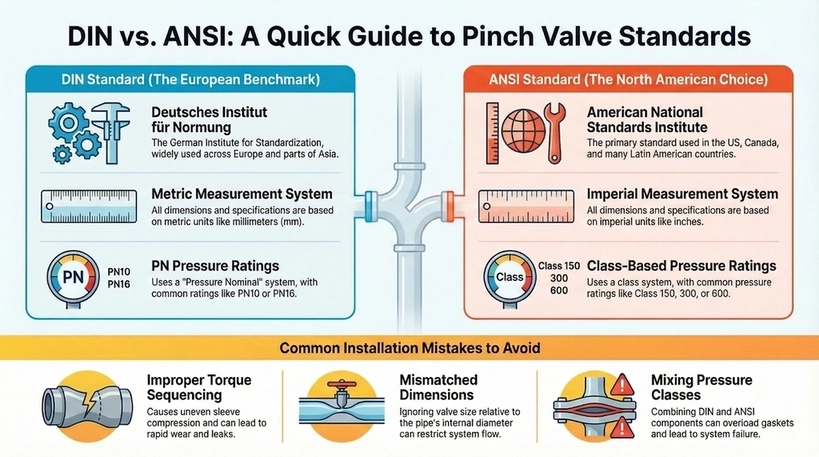
Understanding pinch valve dimensions and flanges ensures seamless integration into piping systems, particularly when choosing between DIN vs ANSI. The two are different but commonly used standards by organizations in engineering, manufacturing, and product design. DIN was developed in Germany but widely adopted across Europe and parts of Asia. Meanwhile, ANSI standards, which originate from […]
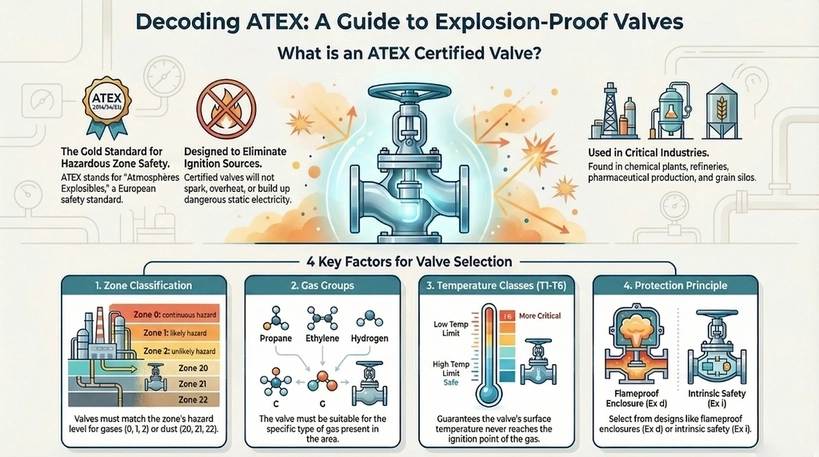
Selecting the appropriate explosion proof valve is essential for safety in industries that pose explosion risks. ATEX certified valves guarantee compliance with European standards, preventing ignition sources from heat, sparks, or static electricity. This blog explores key factors for choosing ATEX certified explosion proof valves that ensure overall operational safety, highlighting the entailed regulations and […]