High pressure válvulas de pinza, like PN16 pinch valve and class 150 pinch valve designs, involve a rugged and heavy-duty pinching mechanism in positioning the sleeve, resulting in an almost accurate and measurable flow of media.
This kind of valve is popular and commonly used for long distance operations in mining tailings lines or oil sands, as it is designed with no seats to wear, no packing to maintain, no expensive body alloys required, and no fugitive emissions. In this blog, we will further explain the importance of high pressure pinch valves in industrial applications.
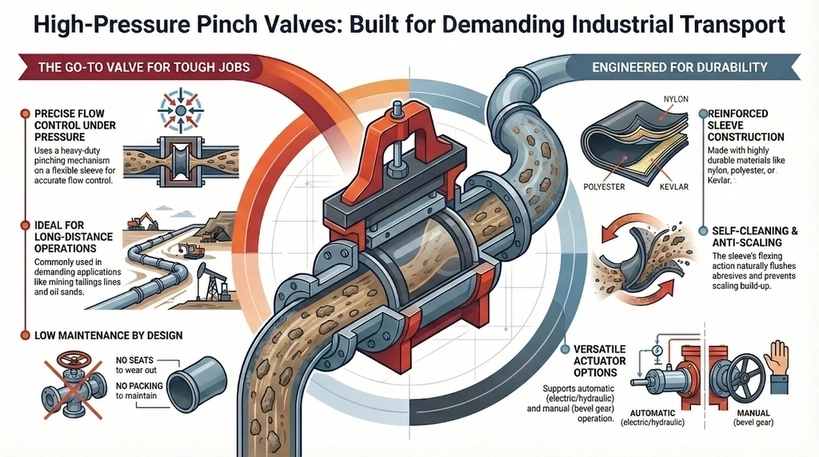
High pressure pinch valves feature robust designs and reinforced rubber sleeves or elastomer constructions with multiple fabric plies, supported with highly durable nylon, polyester fabrics, or Kevlar material. Two heavy-duty pinch bars allow the sleeve to close even on solid materials and its flexing action removes the possibility of scaling. Its self-cleaning ability flushes abrasives during closure, extending the life of high pressure slurry pump valves.
These features surpass standard valves in long-distance transport systems where pressure may increase from elevation changes or pump stations, testing durability. Additionally, their used control pinch valves have varied actuators. Electric or hydraulic actuators are used for automatic operations, while bevel gears are ideal for manual operations.
Calculating a pinch valve’s pressure rating involves learning and understanding its components, particularly the sleeve’s material (rubber/elastomer) and body design, using manufacturer specs, like PN/Class ratings for general use.
However, this mainly depends on knowing your system’s ΔP = Pressure Drop through pinch valve (psi), Q = Flow Rate, and ρ = Fluid Density (p/cu ft), as well as ensuring the material of sleeve can handle the specific temperature and corrosion or abrasion for safe operation as these determine the sleeve’s pinching force and the integrity of the valve body, typically specified in manufacturer sizing charts.
High pressure pinch valves overcome pressure limits in long-distance slurry transport thanks to their robust engineering designs, proven durability, as well as precisely calculated pressure ratings—providing reliable and stable performance for high pressure slurry pump valve demands in pipelines and mining.
Lianke’s versatile rubber sleeve pinch valves for pipe systems are a combination of durability and flexibility. Available in neoprene sleeving and flexible rubber sleeve options, these protective features suit different applications. Additionally, the rubber tube sleeve design guarantees a perfect fit for PVC and metal pipes.
Discover our strict quality control and state-of-the-art facilities ensuring the highest standard for every valve.
Explore Process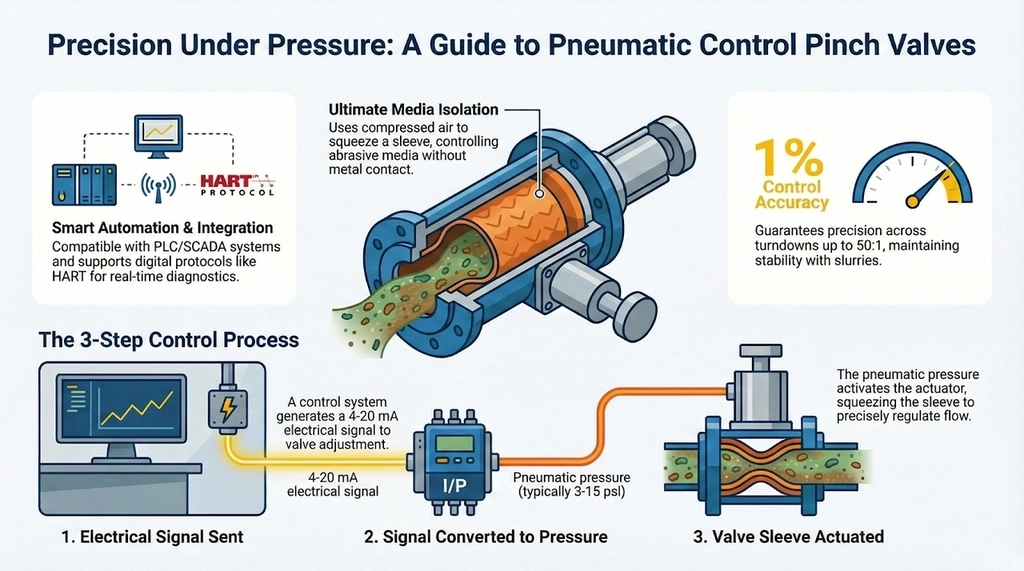
Industrial automation systems require valves that deliver precise flow control without compromising reliability in corrosive or abrasive media. A pneumatic control pinch valve excels as a modulating control valve, enabling precise flow to control pressure, temperature, or fluid levels. Using compressed air to gradually adjust the valve position allows smooth process control in mining, wastewater, […]
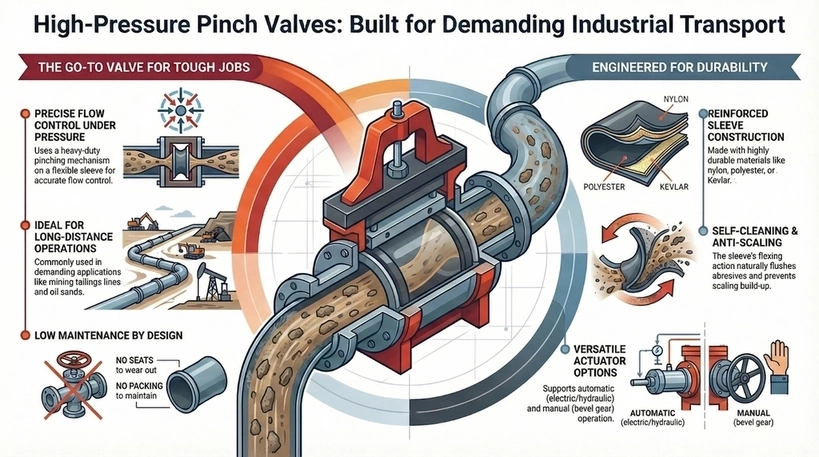
High pressure pinch valves, like PN16 pinch valve and class 150 pinch valve designs, involve a rugged and heavy-duty pinching mechanism in positioning the sleeve, resulting in an almost accurate and measurable flow of media. This kind of valve is popular and commonly used for long distance operations in mining tailings lines or oil sands, […]
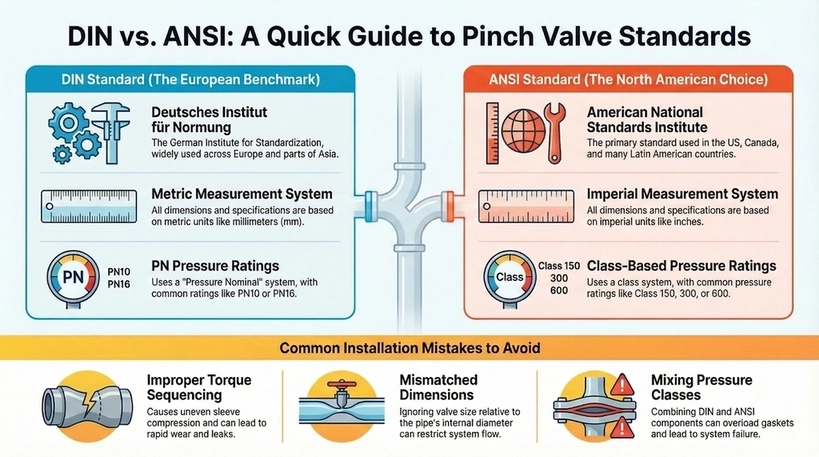
Understanding pinch valve dimensions and flanges ensures seamless integration into piping systems, particularly when choosing between DIN vs ANSI. The two are different but commonly used standards by organizations in engineering, manufacturing, and product design. DIN was developed in Germany but widely adopted across Europe and parts of Asia. Meanwhile, ANSI standards, which originate from […]
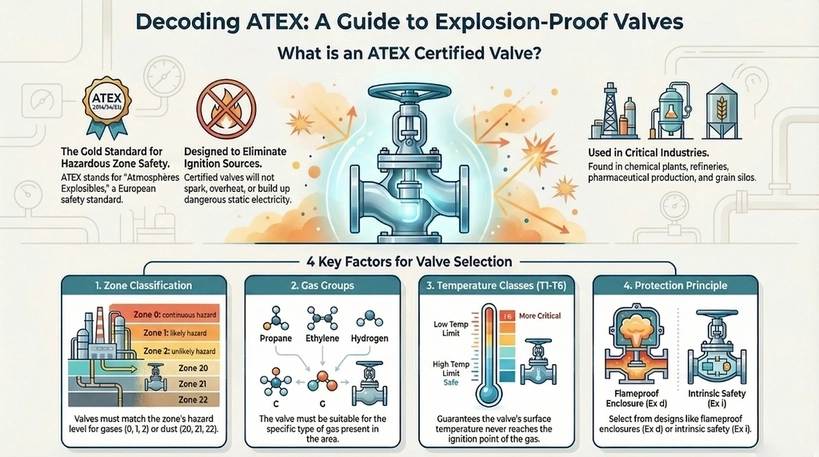
Selecting the appropriate explosion proof valve is essential for safety in industries that pose explosion risks. ATEX certified valves guarantee compliance with European standards, preventing ignition sources from heat, sparks, or static electricity. This blog explores key factors for choosing ATEX certified explosion proof valves that ensure overall operational safety, highlighting the entailed regulations and […]