
Los plásticos y los elastómeros son materiales esenciales en industrias que abarcan desde la fabricación de automóviles hasta los dispositivos médicos. Si bien ambos son polímeros (largas cadenas de moléculas repetidas), sus propiedades y aplicaciones difieren significativamente. Esta guía desglosa sus distinciones técnicas, respaldadas por investigaciones y datos de la industria, para ayudarlo a tomar decisiones informadas sobre los materiales.
Los plásticos son polímeros sintéticos elaborados a partir de monómeros como el etileno o el propileno. Se clasifican en dos tipos:
Los elastómeros, a menudo llamados cauchos, son polímeros con propiedades elásticas. Sus cadenas moleculares están reticuladas, lo que les permite estirarse sobre 100% y volver a su forma original. Algunos ejemplos comunes incluyen silicona y EPDM (Industrias Osborne).
| Propiedad | Plástica | Elastómeros |
|---|---|---|
| Elasticidad | Bajo (estiramiento ≤ 10%) | Alto (estiramiento 100–700%) |
| Resistencia al calor | Varía: PE (80 °C), PEEK (250 °C) | Moderado: Silicona (230°C), EPDM (150°C) |
| Reciclabilidad | Termoplásticos: Sí; Termoestables: No | Limitada (estructura reticulada) |
Los elastómeros absorben la tensión mecánica gracias a su estructura molecular en espiral. Por ejemplo, las juntas tóricas de silicona se estiran para sellar los espacios bajo presión, pero vuelven a su forma original cuando se retira la carga.Estudio PMC).
Los plásticos como el policarbonato mantienen su forma bajo cargas estáticas, pero pueden agrietarse ante un impacto repentino. Las tuberías de PVC soportan una presión de agua constante, pero pueden fallar si se doblan repetidamente.
Los plásticos en la industria
Elastómeros en acción
Plástica
Elastómeros
Los plásticos proporcionan integridad estructural, mientras que los elastómeros aportan flexibilidad. Comprender sus diferencias garantiza la selección óptima de materiales para lograr durabilidad y rendimiento industriales.
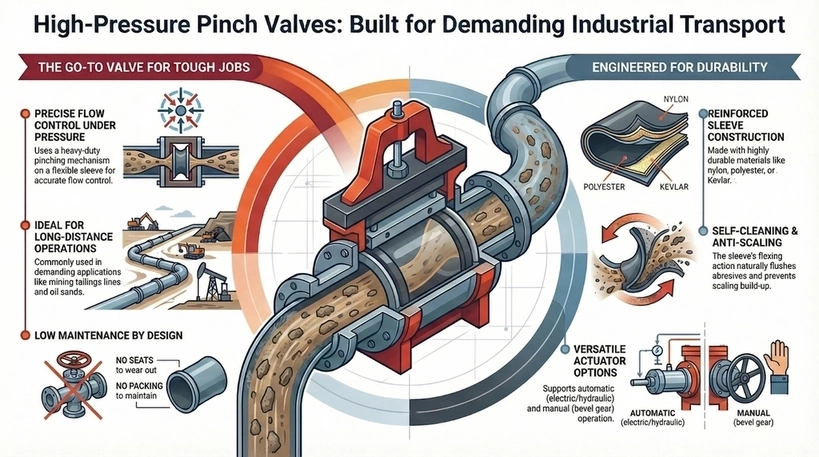
High pressure pinch valves, like PN16 pinch valve and class 150 pinch valve designs, involve a rugged and heavy-duty pinching mechanism in positioning the sleeve, resulting in an almost accurate and measurable flow of media. This kind of valve is popular and commonly used for long distance operations in mining tailings lines or oil sands, […]
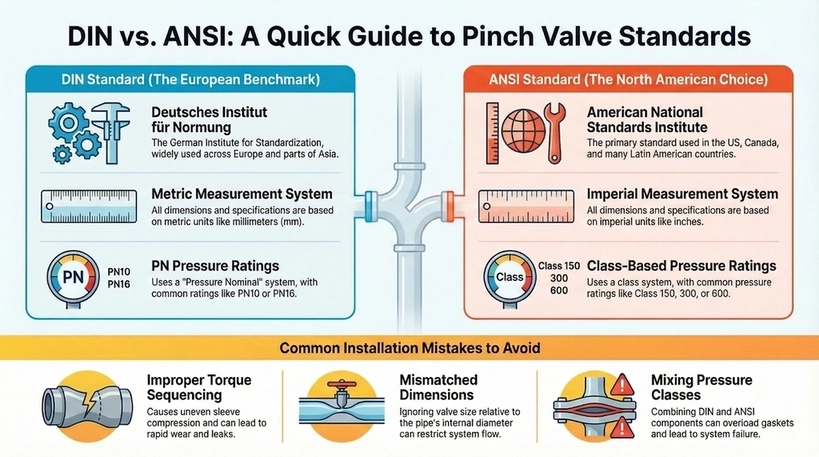
Understanding pinch valve dimensions and flanges ensures seamless integration into piping systems, particularly when choosing between DIN vs ANSI. The two are different but commonly used standards by organizations in engineering, manufacturing, and product design. DIN was developed in Germany but widely adopted across Europe and parts of Asia. Meanwhile, ANSI standards, which originate from […]
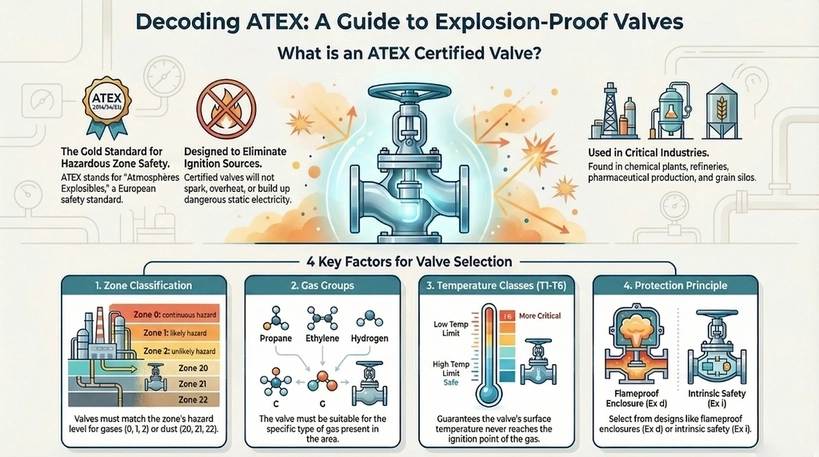
Selecting the appropriate explosion proof valve is essential for safety in industries that pose explosion risks. ATEX certified valves guarantee compliance with European standards, preventing ignition sources from heat, sparks, or static electricity. This blog explores key factors for choosing ATEX certified explosion proof valves that ensure overall operational safety, highlighting the entailed regulations and […]
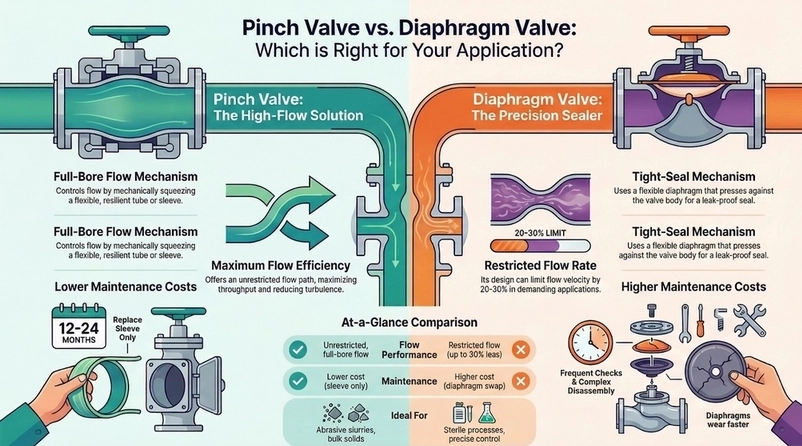
When handling abrasive or viscous media in industrial processes, the type of valve used can heavily affect the performance, efficiency, and overall user experience. In relation to this, two of the most common valve options are pinch and diaphragm valves. In this blog, we delve into the pinch valve vs diaphragm valve discussion, analyzing flow […]

